South Africa's Cultural Villages: A Unique Way to Experience the Rainbow Nation
South Africa is often called the Rainbow Nation, and few experiences bring that phrase to life quite like a visit to a cultural village. These living museums let you step into the homesteads, music, food and everyday rituals of the country's many cultures and peoples, guided by the communities who keep those traditions alive. Some sit a short drive from the big cities, while others are tucked deep in the countryside where the old ways never left.
Here are some of the most rewarding cultural villages to seek out, grouped by region.
In and around Gauteng
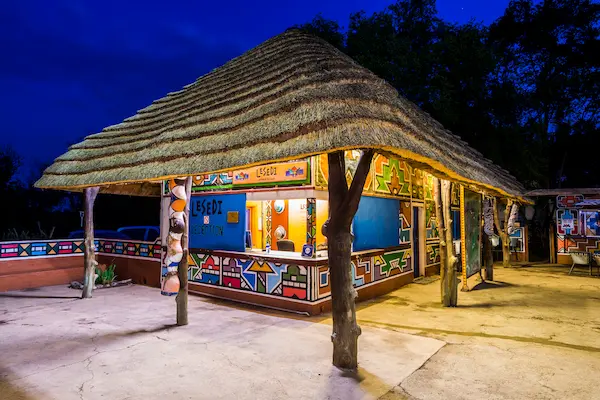
Lesedi Cultural Village lies about an hour from Johannesburg in the rocky hills of the Cradle of Humankind, a UNESCO World Heritage Site[2]. Rather than showcasing a single culture, Lesedi gathers five reconstructed homesteads, Zulu, Xhosa, Pedi, Basotho and Ndebele, each lived in and hosted by members of that community[1]. A visit usually means a guided walk through the homesteads followed by an afternoon of song, dance, storytelling and a shared feast of traditional dishes.
Soweto is not a cultural village in the staged sense, but no tour of cultural life near Johannesburg feels complete without it. The sprawling township became the beating heart of the anti-apartheid struggle, and today it forms part of the City of Johannesburg rather than a town in its own right. Stroll Vilakazi Street, the only street in the world to have housed two Nobel laureates, then take in the Hector Pieterson Museum, Nelson Mandela's former house, and Walter Sisulu Square of Dedication in Kliptown. That square, once known as Freedom Square, is where the Freedom Charter was adopted in 1955[10].
Zululand and the Zulu heartland
For a deep immersion in Zulu culture, head for the green hills of Zululand in northern KwaZulu-Natal.
Shakaland, near Eshowe, began life as the film set for the 1986 SABC mini-series Shaka Zulu[6]. Once filming wrapped, the beehive-hut kraal was turned into a working cultural village, and it runs today as the aha Shakaland Hotel and Zulu Cultural Village[7]. Guests watch traditional dancing, try spear-throwing, learn about Zulu weaponry and beadwork, and can stay overnight in a domed hut above the Phobane valley.
Kwabhekithunga, also known as Stewart's Farm, sits in the heart of Zululand near Eshowe, where local families still live in their homesteads[5]. The welcome here is famously warm. Expect energetic, high-kicking dancing, a chance to try beadwork and shield-making, and a Zulu meal cooked over the fire.
Two others are worth knowing. DumaZulu, near Hluhluwe further north, is one of the largest living Zulu villages and easy to pair with a Big Five safari, while PheZulu Safari Park in the Valley of a Thousand Hills offers a quick taste of Zulu dance and crafts within easy reach of Durban.
The Free State highlands
Basotho Cultural Village celebrates the heritage of the Southern Sotho in a striking setting inside Golden Gate Highlands National Park, which absorbed the former QwaQwa National Park[4]. A guide walks you from an early-style dwelling through to a 19th-century chief's court, explaining how Basotho building, decoration and herbal medicine developed over time[3]. The painted geometric walls are a highlight in themselves, and a fine companion to the country's wider architectural traditions.
Mpumalanga and the North West
Botshabelo lies about 12km north of Middelburg in Mpumalanga, built around a mission station founded by the Berlin missionary Alexander Merensky in 1865[8]. Its open-air Ndebele village is the real draw, with the bold geometric wall murals and intricate beadwork the Ndebele are famous for, an art form woven into the country's most distinctive building styles.
Groot Marico, in the North West, is bushveld country best known as the setting for Herman Charles Bosman's much-loved short stories[9]. It started out as a Voortrekker settlement in the 1850s, and that frontier heritage still colours its farms and hospitality. Most people come for the slow pace, a tasting of mampoer (the fierce local peach moonshine) and hearty Boere cooking.
The Western Cape
On the West Coast about an hour north of Cape Town, the !Khwa ttu San Heritage Centre tells the story of southern Africa's First People, the San, through exhibitions and tours led by San guides. It is a thoughtful, modern take on cultural tourism that puts the community firmly in charge of its own story.
Planning your visit
Most villages offer both day visits and overnight stays, and the evening programmes, once the fires are lit and the dancing begins, tend to be the most memorable. Book ahead in peak season, and ask whether your visit directly supports the resident community, because the finest of these places are run by and for the people whose heritage they share.
📅 Last Updated: May 2026 • Fact-checked and refreshed with corrected locations, current village names, source citations and internal links.
Sources
- South African Tourism, Immerse yourself in culture at the Lesedi African Lodge and Cultural Village
- UNESCO World Heritage Centre, Fossil Hominid Sites of South Africa (Cradle of Humankind)
- South African History Online, Basotho Cultural Village
- Wikipedia, Golden Gate Highlands National Park
- Places.co.za, Kwabhekithunga (Stewart's Farm)
- Wikipedia, Shaka Zulu (TV series, 1986)
- South African Tourism, aha Shakaland Hotel and Zulu Cultural Village
- Wikipedia, Botshabelo, Mpumalanga
- Wikipedia, Groot Marico
- Wikipedia, Walter Sisulu Square
What do you think?
Join the conversation on our South African community forum. Share your perspective, ask a question, or just say hello.