How Bad Is South Africa's Air Quality, Really?
On a still winter morning Johannesburg has ranked as the most polluted big city on earth. Here's what's driving it, who pays the price, and what you can do.
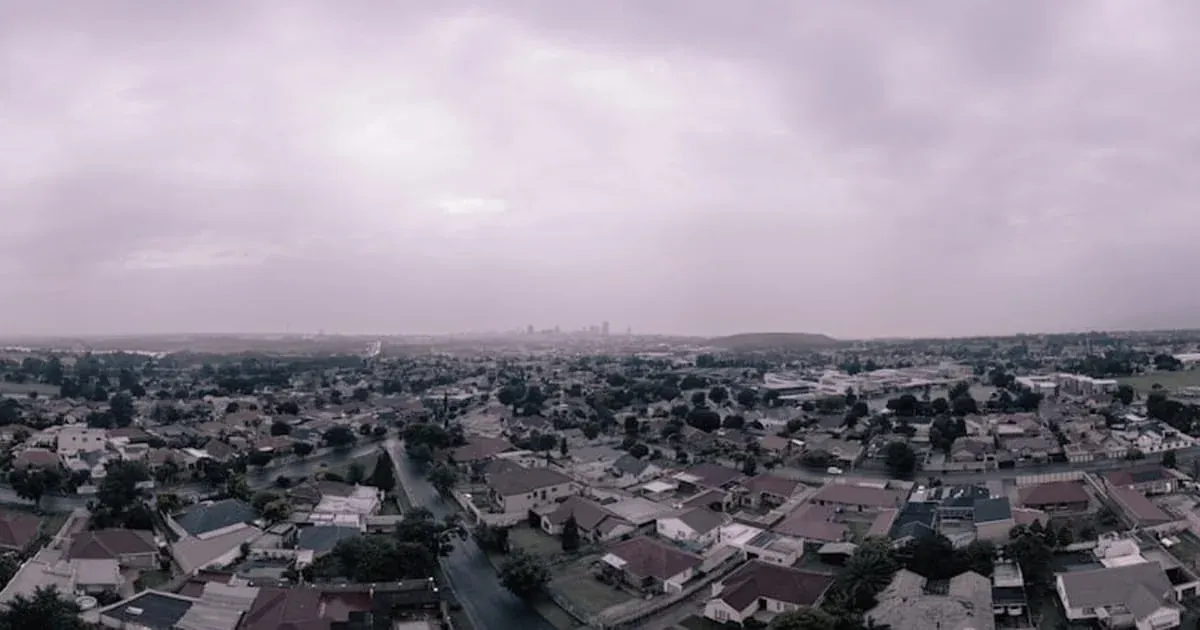
If you've ever stood on a Johannesburg balcony on a still June morning and noticed the horizon looks like it's been rubbed with a dirty eraser, that's not your imagination. On the 31st of May this year, IQAir's live rankings briefly put Johannesburg at the top of the list, ahead of Lahore, Delhi and Kinshasa, as the most polluted major city in the world at that hour.[1] It didn't stay there; air quality swings hour to hour, but it's not a one-off. Winter after winter, the same haze settles over Gauteng and Mpumalanga, and most people just call it "highveld weather" and get on with their day.
It's worth pulling that apart properly, because South Africa's air quality problem is bigger, older and more unevenly distributed than a single bad headline suggests.
How bad is Johannesburg's air, in numbers?
Johannesburg's annual average PM2.5 concentration for 2025 came in at 17.1 micrograms per cubic metre.[1] That sounds abstract until you compare it to the benchmark: the World Health Organization's guideline for safe annual exposure is 5 micrograms per cubic metre. So on an average day, not even a bad one, Joburg's air carries more than three times the fine particulate matter the WHO considers safe to breathe long term, year in and year out.
And Johannesburg isn't even the worst of it. East of the city, in the industrial belt that stretches through Mpumalanga, sits the Highveld Priority Area, a stretch of roughly 31,000 square kilometres declared a national pollution hotspot back in 2007. It's home to a cluster of Eskom's coal-fired power stations, Sasol's Secunda coal-to-liquid plant (the only one of its kind in the world), plus coal mines, steel smelters and chemical plants, all sitting more or less on top of each other.[2] In March this year, monitors in eMalahleni recorded a daily PM2.5 reading of 187 micrograms per cubic metre, more than 12 times the WHO's 24-hour guideline of 15 micrograms per cubic metre. Sulphur dioxide near Secunda hit 370 parts per billion in early 2026, against a national standard of 48.[2]
Put side by side, the gap between what gets measured and what counts as safe looks like this:
| Where | Pollutant | Measured | Guideline or standard | Multiple |
|---|---|---|---|---|
| Johannesburg | PM2.5, annual average 2025 | 17.1 µg/m³ | 5 µg/m³ (WHO) | 3.4 times over |
| eMalahleni | PM2.5, daily reading March 2026 | 187 µg/m³ | 15 µg/m³ (WHO) | 12.5 times over |
| Secunda | Sulphur dioxide, early 2026 | 370 ppb | 48 ppb (SA standard) | 7.7 times over |
| Khayelitsha, Cape Town | PM10, annual average 2021 | Above 40 µg/m³ | 40 µg/m³ (SA standard) | Exceeded |
WHO guideline values and South African national standards are set on different bases, so the two are not directly interchangeable, they are both shown here as the benchmark that applies to each reading.
A 2019 Greenpeace analysis ranked the Highveld among the worst places on the planet for nitrogen dioxide and sulphur dioxide emissions, not just the worst in South Africa.[3] That ranking is now several years old, but little about the underlying industry footprint has changed since.
Where is the air worst in South Africa?
The Highveld gets most of the attention, but it isn't the only place government has formally admitted has a problem. Under the Air Quality Act, the environment minister can declare a national priority area where pollution levels breach the standards and no single municipality can fix it alone. Three have been declared so far.[8]
The Vaal Triangle Airshed came first, declared in April 2006, covering Vanderbijlpark, Vereeniging, Sasolburg and the southern edge of Johannesburg. Its management plan was gazetted in 2009. Six monitoring stations watch it, at Diepkloof, Kliprivier, Sebokeng, Sharpeville, Three Rivers and Zamdela, and the pollutant doing the most damage to health there is PM10, driven by a mix of heavy industry, domestic coal burning and waste burning. Twenty years on, residents and researchers make much the same complaint as on the Highveld: emission exemptions keep being granted, and the air has barely moved. The same coal economy leaves its mark on the water too, with acid mine drainage from old workings still degrading the Vaal and Olifants catchments, part of the broader water infrastructure crisis.
The Highveld followed in November 2007, plan gazetted in 2012. It is the one the Deadly Air case was fought over.
The Waterberg-Bojanala area was declared in June 2012, with its plan gazetted in 2015. It stretches across Limpopo and North West, taking in Lephalale, where Eskom's Medupi and Matimba power stations sit almost side by side, and the platinum belt around Rustenburg. It is the youngest of the three and the one most likely to get worse rather than better, because it is where the coal and mining expansion has been heading.
If you live inside one of those three areas, the air you breathe is not a matter of opinion. The state has already conceded, in the Government Gazette, that it fails the standards it wrote itself.
Why does winter make it so much worse?
Pollution doesn't spike randomly. In winter, the Highveld gets cold, dry and still, and temperature inversions trap a layer of cool air, and everything in it, close to the ground instead of letting it rise and disperse. At the same time, more people are burning coal and wood to heat their homes, veld fires pick up, and the whole region effectively puts a lid on itself for a few months. That's why weather reports mentioning "hazy conditions expected over Gauteng" every May and June aren't being dramatic; they're describing a real seasonal pattern, and one that follows directly from the highveld's climate of crisp, dry, windless winter days. Spring's warmer air and stronger winds are usually what finally clears it, not any change in what's being pumped into the sky.
What about Cape Town and Durban?
Both have air quality problems, and both look nothing like the Highveld's.
Cape Town's is the brown haze, and its timing catches people out. The city's own 2024 air quality management plan puts the haze episodes in late winter and early spring, under strong overnight temperature inversions that usually come with light berg wind conditions ahead of a migrating coastal low.[9] Mid-winter's north-westerly gales actually scrub the air clean, which is why the worst mornings often arrive on a still, warm, deceptively pretty day. Citywide, sulphur dioxide sits comfortably below the national standards and has trended down for over a decade. Particulates are the real issue, and they are concentrated in the dense low-income suburbs: of the City's 13 monitoring stations, only Khayelitsha and Wallacedene failed the 40 micrograms per cubic metre annual PM10 standard in 2021, driven by wood burning by informal food traders, waste and tyre burning, traffic and dust off unpaved surfaces. The plan also names load shedding directly as something that worsens localised exceedances, because unelectrified and unpowered households fall back on wood and paraffin.
Durban's problem is the South Durban Basin, the strip of Wentworth, Merebank and Bluff residents who have lived alongside two oil refineries, a paper mill and a working port for decades, with unusually high rates of asthma and other respiratory illness to show for it.[10] What makes it unusual right now is that neither refinery is running. Engen's Durban plant stopped after an explosion and fire in December 2020 and was permanently converted into an import terminal. Sapref stopped refining in 2022, and the KwaZulu-Natal floods that year washed hydrocarbons out of the site and onto a nearby beach. Shell and BP later sold it to the state-owned Central Energy Fund for one rand.[10] The contamination was never cleaned up, and in 2026 the minerals and petroleum minister has been pushing to restart Sapref to boost local fuel production, which residents and environmental researchers are fighting on the grounds that reopening it without dealing with the existing pollution legacy simply restarts the harm.[11]
Who actually pays for it?
This isn't just an inconvenience for people who enjoy a clear view of the sky. Research from the South African Medical Research Council has linked pollutants like PM10 and sulphur dioxide in the Highveld to higher rates of tuberculosis, asthma, sinus disease and general respiratory illness, along with elevated cardiovascular risk.[4] A study of adolescents living in the Highveld Priority Area found measurably worse respiratory health than in comparison areas.[5] Nationally, air pollution was linked to an estimated 25,800 premature deaths in South Africa in 2019 alone, making it the country's second largest health risk. Nearly every South African breathes air that exceeds WHO guideline levels at some point.[4]
The burden isn't spread evenly either. Communities that live closest to the power stations and refineries, often lower income and with the least ability to relocate, carry the heaviest exposure. Add household air pollution on top of that: many families in these areas still cook and heat with coal, wood or paraffin, and indoor PM2.5 levels in those homes have been measured higher than the polluted air outside.
It's serious enough that in 2022 South Africa's High Court ruled, in what's become known as the "Deadly Air" case, that the state of the air in the Highveld breaches residents' constitutional right to an environment that isn't harmful to their health. The environment minister appealed, and lost: in April 2025 the Supreme Court of Appeal dismissed that appeal and gave the minister twelve months to publish enforceable regulations giving effect to the Highveld air quality plan.[6] That deadline fell in April 2026. Government's own Highveld Priority Area plan now targets a 40% cut in emissions by 2030, but environmental groups like groundWork argue that emissions exemptions already handed to Eskom and Sasol make that target close to unreachable as things stand, and Sasol itself has pushed back on the idea that the target applies to each of its facilities individually rather than the industry as a whole.[2]
What can you actually do about it?
You can't fix a coal power station from your living room, but you can reduce how much of this you and your family breathe in.
Check before you commit to an outdoor run. The government's own SAAQIS platform (saaqis.environment.gov.za) pulls real-time readings from a national network of more than 130 government-run monitoring stations, plus dozens of private ones, and there's a free app for it.[7] IQAir's website and app cover the same ground with easier-to-read colour ratings. On a bad air day, especially in Gauteng or Mpumalanga in winter, push the gym session or the jog indoors.
Mind the indoor air too. If your household burns coal, wood or paraffin for heating or cooking, make sure the room is properly ventilated. Studies in South African townships have repeatedly found indoor pollution levels higher than what's outside, precisely because a closed room traps smoke that would otherwise disperse.
Keep windows shut on inversion mornings and open them once the haze lifts, usually by mid to late morning once the sun has warmed the air enough to break the inversion.
If you or your children have asthma, TB history or heart conditions, treat high-AQI days the way you'd treat a pollen warning: keep reliever medication on hand, limit exertion outdoors, and speak to a doctor about a mask if you live in or near the Highveld belt.
None of this fixes the underlying problem. That requires power stations that actually meet emissions standards, a coal-to-liquid industry that either cleans up or winds down, and a state willing to enforce its own court orders. But knowing what's actually in the air you're breathing, and on which days it's worse, is the one piece of this you can act on today.
Quick answers
Which city has the worst air quality in South Africa?
On annual averages Johannesburg is the worst of the big cities, at 17.1 micrograms per cubic metre of PM2.5 in 2025. But the worst air in the country isn't in a city at all. It's in the industrial towns of the Highveld, where eMalahleni and Secunda record readings several times higher than anything Johannesburg sees.
Which parts of South Africa are officially declared pollution hotspots?
Three areas have been declared national air quality priority areas: the Vaal Triangle Airshed in April 2006, the Highveld in November 2007, and Waterberg-Bojanala in June 2012. The declaration is a formal admission by government that the national air quality standards are being breached there.
How do I check the air quality where I live?
SAAQIS, the government's South African Air Quality Information System, is free and pulls live readings from more than 130 official monitoring stations, on the web and as an app. IQAir covers the same stations with simpler colour ratings. Both are worth checking before an early morning run in winter.
Does load shedding make air pollution worse?
Yes, in two ways. Households without power fall back on wood, coal and paraffin for cooking and heating, which is the biggest driver of particulate pollution in dense low-income suburbs. Cape Town's own air quality management plan names load shedding directly as something that worsens local exceedances. Running diesel and gas turbines to plug the supply gap adds to it on the industrial side.
Is it safe to exercise outdoors in Johannesburg?
Most of the year, yes. The problem is concentrated in still winter mornings from about May to August, when an inversion traps everything close to the ground. On those days the air usually clears by mid to late morning, so shifting a run later, or indoors, does most of the work. If you have asthma or a heart condition, check SAAQIS or IQAir first rather than judging by eye.
Sources
- IQAir, "Johannesburg among top 10 most polluted cities in the world," 31 May 2026
- Mongabay, "Failed promises to clean air in South Africa's coal belt take toll on public health," June 2026
- Greenpeace Africa, "Air Pollution in South Africa: The Silent Killer That Demands Urgent Action"
- Clean Air Fund, South Africa country page
- Respiratory health among adolescents living in the Highveld Air Pollution Priority Area, BMC Public Health
- groundWork, "Deadly Air Case: Minister's Appeal Dismissed by Supreme Court of Appeal"
- SAAQIS, South African Air Quality Information System
- SAAQIS, National Priority Areas, declaration dates and management plans
- City of Cape Town, Air Quality Management Plan 2024
- The Conversation, "When polluters don't pay: still no cleanup at South African oil refinery"
- IOL, "Outrage builds as Sapref revival plan stirs environmental alarm," 30 March 2026
What do you think?
Join the conversation on our South African community forum. Share your perspective, ask a question, or just say hello.