
Exploring the Orange River: South Africa's Longest River and Its Natural Wonders
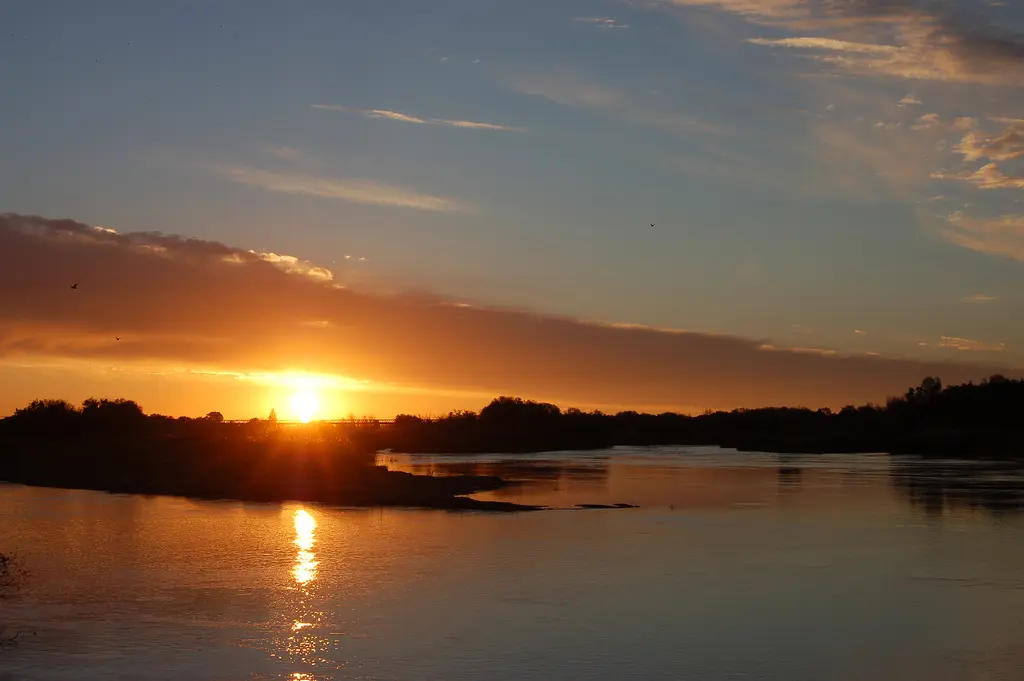
The Orange River, known as "eGariep" to the Bushmen and "die Grootrivier" to early explorers, is a significant geographical feature of South Africa. Despite common misconceptions, its name isn't derived from its color. Instead, it was named "Oranjerivier" in 1777 by Robert Jacob Gordon, a Dutchman of Scottish descent, to honor Prince William of the Royal Dutch House of Orange.
As South Africa's longest river, the Orange River originates from the Maluti Mountains in Lesotho and travels approximately 2,250 km to the Atlantic Ocean, making it the world's 39th longest river. Its primary water source is the Caledon River and its tributary, the Vaal River. The river has been dammed at two locations: the Gariep Dam near Colesberg and the Vanderkloof Dam downstream.
The Gariep Dam, covering an area of 374 square kilometres, has a storage capacity of 5,670 million cubic metres of water when full and generates 360 MW of hydroelectric power from four 90 MW generating units. The Vanderkloof Dam holds 3,236 million cubic metres of water and produces 240 MW of hydroelectric power from two 120 MW machines. Together these two dams are critical to South Africa's water security and to the national electricity grid.
The Orange River forms international borders between South Africa and Namibia, South Africa and Lesotho, as well as several provincial borders within South Africa. Despite not passing through any major cities, it plays a crucial role in the South African economy by supporting agriculture, industry, and mining.
The river is home to the Augrabies Falls, one of the most powerful waterfalls in Africa, located just below the town of Kakamas in the Northern Cape. This natural wonder, whose name means "place of great noise," is a sight to behold. During flood seasons the falls' flow rate can exceed 7,000 cubic metres per second.
The river's course changes direction in the Richtersveld area, where it heads north before continuing westwards through the Northern Cape coastal plain and finally reaching the Atlantic Ocean between Alexander Bay and Oranjemund on the Diamond Coast of South Africa and Namibia.
The Orange River is a popular destination for river run adventures in South Africa, offering thrilling yet safe river trails. Rapids along the stretch between Noordoewer and the Fish River Junction reach a grade of 2 to 2.5 (graded between 1 and 6, from gentle to impossible).
These river safaris, lasting 3 to 6 days and covering about 20 kilometres per day, offer a unique wilderness experience. Participants can expect to sleep under the stars, enjoy spectacular desert sunsets, stunning rose-coloured mountains, unusual rock formations, and evenings around the campfire. The river is home to 276 species of birds, and lucky visitors might spot baboons, vervet monkeys, and even wild desert horses coming to drink at the water's edge.
The Lesotho Highlands Water Project Phase II
One of the most significant infrastructure developments affecting the Orange River system is the ongoing second phase of the Lesotho Highlands Water Project (LHWP). Phase II centres on the construction of the Polihali Dam in Lesotho's highlands, a massive rockfill dam that reached major construction milestones in late 2025. The project is expected to be completed by 2028 to 2029 and will significantly increase the volume of water transferred to South Africa's economic heartland in Gauteng via a tunnel linking the Polihali reservoir to the Katse Dam. This upstream development will have notable implications for the seasonal flow dynamics of the Orange River system downstream.
Environmental Health and Water Quality
While the Orange River supports vast agricultural, industrial, and domestic water demands across four countries, it faces growing environmental pressures. Joint Basin Surveys conducted by the Orange-Senqu River Commission (ORASECOM), the transboundary body that coordinates management of the river among Lesotho, Namibia, Botswana, and South Africa, indicate that the lower reaches of the river are moderately modified, with concerns around nutrient pollution and heavy metal contamination linked to mining and agricultural runoff. ORASECOM plays a central role in monitoring and protecting the river's health across national boundaries.
Diamond Mining and Community Initiatives
Where the Orange River meets the Atlantic Ocean lies the Diamond Coast, one of the world's richest alluvial diamond deposits. Centuries of river flow have carried diamonds from kimberlite pipes in the interior and deposited them along the coastline and riverbed of the Richtersveld and Namaqualand regions. Recent years have seen the rollout of Community Artisanal Mining projects in the Northern Cape, aimed at formalising small-scale mining, curbing illegal operations, and providing sustainable livelihoods for communities along the lower Orange River.
A River Shaped by Rainfall and Climate
The Orange River's flow varies dramatically with rainfall cycles. The early months of 2026 brought an unusually wet start to the cold season, pushing the Gariep Dam above 100% of its storage capacity, a vivid reminder of the river's dynamic nature and its outsized importance to South Africa's water security during both drought and flood years.
What do you think?
Join the conversation on our South African community forum. Share your perspective, ask a question, or just say hello.