Heritage Day in South Africa: History, Meaning and the Braai
A hard political compromise gave South Africa a day to celebrate every culture at once. Then, a decade later, everyone agreed on a braai too.
Heritage Day falls on 24 September, and depending on where in South Africa you grew up, that date carries a different first memory. For some it means a school concert with children dressed in Basotho blankets or Zulu beadwork. For most people today it simply means smoke drifting over the neighbourhood from somebody's fire. Both are correct, and the way one date came to hold both meanings says a lot about how South Africa built its post-apartheid public holidays.
From Shaka's Day to a holiday for everyone
Long before it was Heritage Day, 24 September was observed in KwaZulu-Natal as Shaka's Day, marking the presumed anniversary of the death of King Shaka in 1828. Shaka united a patchwork of Nguni clans into the Zulu nation, and for generations communities gathered at his grave in KwaDukuza to honour him.
When the newly democratic Parliament drew up the Public Holidays Bill in 1994, 24 September was not on the proposed list. The Inkatha Freedom Party, which drew much of its support from Zulu communities, objected to losing a date that meant so much to its base. Rather than fight that battle out, negotiators reached a compromise that is very South African in its logic: instead of a day for one king and one nation within the nation, the date would become a day for all of it. Heritage Day was first observed as a public holiday on 24 September 1995, the year after the country's first democratic election.
President Nelson Mandela made the thinking behind it explicit the following year, saying "when our first democratically elected government decided to make Heritage Day one of our national days, we did so because we knew that our rich and varied cultural heritage has a profound power to help build our new nation." It was one of several holidays, alongside Human Rights Day and Freedom Day, built to give the new South Africa shared dates to stand on rather than only shared grievances to move past.
What the day is actually meant to celebrate
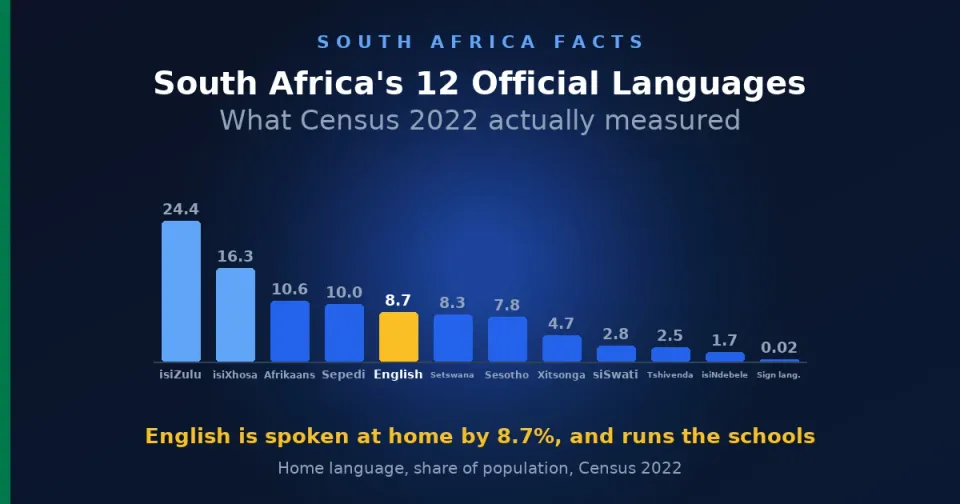
On paper, Heritage Day exists to celebrate the full range of cultures, languages and traditions that make up the country, from Zulu, Xhosa, Sotho, Tswana, Venda, Tsonga, Ndebele, Swazi, Afrikaans and English speaking communities to Khoisan heritage and the many communities who trace their roots to India, Malaysia, Europe and elsewhere. South Africa recognises twelve official languages, South African Sign Language having joined the original eleven when President Cyril Ramaphosa signed the constitutional amendment in July 2023, and Heritage Day is the one day officially set aside to notice that range rather than simply live around it.
In practice that takes different forms depending on where you are. Schools hold cultural days where pupils bring dishes and dress from home. Museums, iziko sites and heritage centres run free or discounted entry and put on exhibitions and performances. Government has expanded the single day into Heritage Month, running through all of September, with a different national theme each year. For Heritage Month 2026 the theme is "Reimagine our heritage institutions for a new era," pushing museums specifically to modernise how they preserve and present the country's past rather than only look back at it. The 2026 launch is set for Oudtshoorn in the Western Cape.
How the braai got involved
The version of Heritage Day most South Africans actually recognise today has a fire in it. In 2005, cookbook author and TV presenter Jan Scannell, who goes by Jan Braai, started a campaign called National Braai Day, built on the idea that whatever else divides South Africans, almost everyone braais. He argued it was one of the few genuinely shared traditions across race, language and class, and that 24 September was the natural day to build it around.
The campaign gathered real institutional weight in 2007, when Archbishop Emeritus Desmond Tutu agreed to become its national spokesperson. Tutu, never short of a memorable line, put it this way: "we're going to have this wonderful thing... when we all gather around one fire." By the end of that year the initiative had renamed itself Braai4Heritage and won the formal endorsement of the National Heritage Council, tying the fire and the flag together for good.
Not everyone loves the swap
The braai's popularity has not gone unquestioned. Some commentators and heritage writers argue that a day created to remember Shaka, and reshaped as a hard-won compromise for cultural recognition, has quietly been rebranded around meat and fire, with the political and historical reasons behind the holiday fading from public memory as a result. The counterargument, made just as often, is that a braai is genuinely cross-cultural in South Africa, practised long before Jan Braai gave it a marketing campaign, and that gathering around a fire with people who do not look, speak or worship like you is not a bad way to spend a day meant to celebrate exactly that kind of difference.
Both views can be true at once. The holiday's origin, in a hard political compromise over whose history gets a public day, is worth remembering precisely because it is the part that gets left out of the braai adverts.
Heritage beyond one day on the calendar
South Africa's heritage extends well past 24 September into a formal list recognised by UNESCO. The country is home to twelve World Heritage Sites, among them the Cradle of Humankind northwest of Johannesburg, where around forty percent of the world's known hominid fossils have been found, Robben Island, where Nelson Mandela and other political prisoners were held, the iSimangaliso Wetland Park in KwaZulu-Natal and the Cape Floral Region's extraordinary plant diversity. The two newest additions were only inscribed in 2024, both tied to Nelson Mandela's legacy and to some of the earliest evidence of modern human behaviour found anywhere on Earth. Each site is, in its own way, a piece of the same story Heritage Day tells in miniature: a history far older and stranger than any single group can claim on its own.
If Heritage Day is one of the fixed dates on your calendar every year, our long weekend leave planner shows which other 2026 public holidays are worth combining with a day of annual leave.
Frequently asked questions
When is Heritage Day in South Africa?
Heritage Day is a fixed public holiday on 24 September every year, not a floating date, so it falls on a different day of the week annually.
Why is Heritage Day also called Braai Day?
Braai Day is an unofficial nickname that grew out of Jan Scannell's National Braai Day campaign, launched in 2005 and later endorsed by the National Heritage Council as Braai4Heritage. It is not the holiday's legal name, which remains Heritage Day.
Was Heritage Day originally Shaka Day?
Yes, in KwaZulu-Natal 24 September was observed as Shaka's Day before it became a national public holiday, marking the presumed anniversary of King Shaka's death in 1828. It became Heritage Day in 1995 after the Inkatha Freedom Party's objection to its exclusion from the new Public Holidays Bill led to a compromise broadening it into a day for all South Africans.
Is Heritage Day a public holiday for everyone in South Africa?
Yes, it is a national public holiday under the Public Holidays Act and applies across the whole country, not only in KwaZulu-Natal.
How many UNESCO World Heritage Sites does South Africa have?
Twelve, ranging from the Cradle of Humankind and Robben Island to the Cape Floral Region and the Barberton Makhonjwa Mountains, among the oldest exposed rock formations on Earth, with the two most recent sites only inscribed in 2024.
What do you think?
Join the conversation on our South African community forum. Share your perspective, ask a question, or just say hello.