Food Security in South Africa: What the Numbers Actually Show
Stats SA's own numbers show food insecurity rising sharply since 2019. Here's what's driving it, who it hits hardest, and what's actually helping.
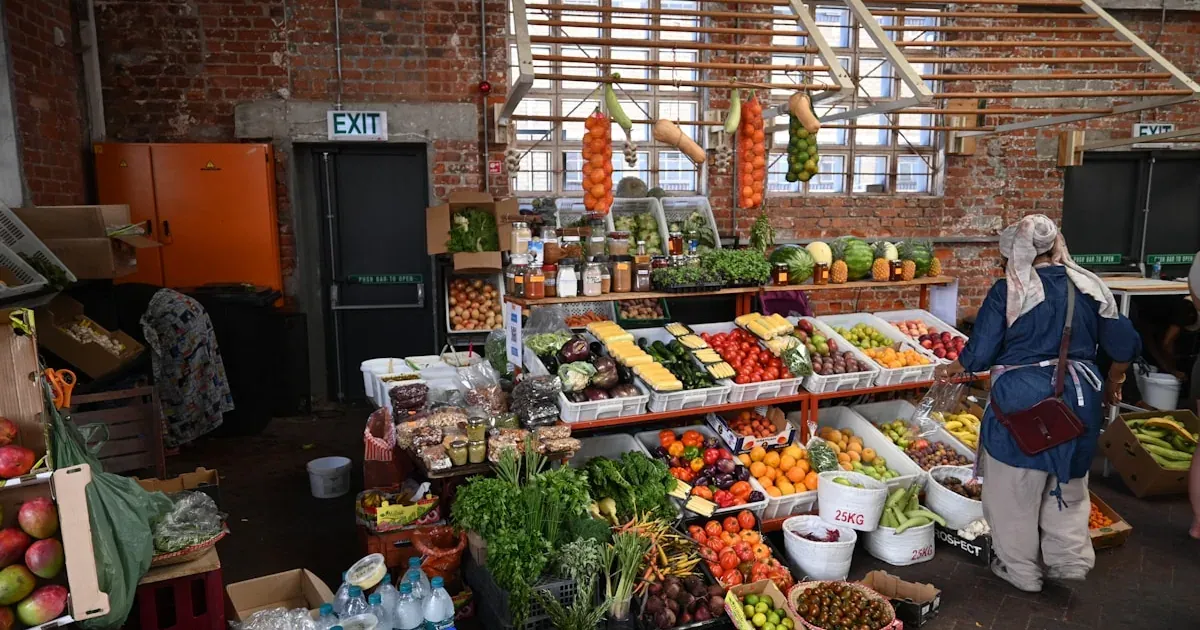
South Africa is one of the world's more productive agricultural exporters, shipping out maize, citrus, wine and macadamia nuts by the container-load every year. But whether a country produces enough food and whether its poorest households can afford enough food are two different questions, and the numbers make clear it's the second one South Africa is failing at. Millions of households here run out of food before the month is out, not because there isn't food in the country, but because they can't afford what's on the shelf.
The numbers, from the source that matters
Statistics South Africa tracks this through the General Household Survey, and its most recent report[1] shows the trend moving the wrong way. The share of households experiencing moderate to severe food insecurity rose from 15.8% in 2019 to 16.2% in 2022, then to 19.7% in 2023. Severe food insecurity, the harder-edged measure that means a household has actually run out of food and gone without eating, climbed from 6.4% to 7.5% to 8.0% over the same three surveys.
Put plainly, close to one in five South African households could not always get enough to eat in 2023, and roughly one in twelve went hungry outright. A separate study built specifically to measure this in more depth, the National Food and Nutrition Security Survey, commissioned by the Department of Agriculture, Land Reform and Rural Development and carried out by the Human Sciences Research Council across all nine provinces between 2021 and 2023, put household food insecurity far higher still, at 63.5%, with 17.5% severely affected[2]. It used a different toolkit, the Household Food Insecurity Access Scale, which captures more of the day-to-day coping households actually do, skipping meals, eating smaller portions, going a day without, than the GHS questions Stats SA asks. The two studies aren't measuring quite the same thing, but between them they leave no doubt this is a mass-scale problem, not a marginal one.
The 2024 numbers, updated
Stats SA's General Household Survey for 2024, published the following year, adds a more current data point[11]. It tracks a related but not identical measure to the dedicated food security report above (its own series put the same indicator at 17.8% in 2019, against 15.8% in the report cited earlier), so the two shouldn't be read as one continuous run of numbers, but they move the same way: 22.2% of households nationally considered their access to food inadequate or severely inadequate in 2024. The Northern Cape stayed worst at 34.3%, but the Eastern Cape overtook North West and Mpumalanga to become the second-worst province at 31.2%. Limpopo again had the lowest rate, 5.9%. Among the metros specifically, 18.2% of households were affected, and Nelson Mandela Bay had overtaken Mangaung as the worst-hit metro by 2024, at 33.4% against Mangaung's 27.8%.
Where it bites hardest
Food insecurity in South Africa isn't spread evenly. The Northern Cape had the worst numbers in the country in 2023, with 34.5% of households moderately to severely food insecure, up sharply from 26.3% in 2019. North West (29.7%) and Mpumalanga (26.6%) weren't far behind. The Free State was the only province where things actually improved, food insecurity there fell from 23.6% in 2019 to 18.7% in 2023, though it's still above the national average. Limpopo posted the lowest rate in the country, just 5.7%.
Rural areas carry a heavier burden than cities. Households in traditional, rural settlement areas had a 26.8% food insecurity rate in 2023, against 17.0% in urban areas. Among the metros, Mangaung in the Free State had the worst rate at 23.7%, while Tshwane had the best at 11.4%.
The demographic pattern is just as stark. Female-headed households were more likely to go without food, 21.5% versus 18.4% for male-headed households, and Black African-headed households recorded the highest rate of any population group at 21.7%, compared with 21.0% for Coloured-headed households, 2.8% for white-headed households and 1.4% for Indian or Asian-headed households. Household size matters too: families of six or more had the highest food insecurity of any size group, at 28.5%.
But the single clearest divide is employment. In households with nobody working, 29.5% experienced moderate to severe food insecurity. In households with at least one employed member, that fell to 15.4%. A job in the house is close to the strongest protection against hunger that Stats SA's data can show.
What it does to children
The consequences of food insecurity fall hardest on the youngest. Roughly one in four South African children under five is stunted, meaning their height for their age reflects chronic, long-term undernutrition rather than a single bad month, and severe acute malnutrition in children under five rose from 1.5 cases per 1,000 in 2020 to 2.4 per 1,000 by mid-2023, an increase of roughly 60%[3]. Stunting at that age is difficult to reverse and is linked to worse outcomes in school and later in life.
At the acute end, the health department's own figures are sobering. According to written parliamentary replies from Health Minister Aaron Motsoaledi[4], 155 children under five died in public hospitals between January and April 2025 with moderate or severe acute malnutrition recorded as an underlying cause, followed by a further 298 deaths between May and September. Over those nine months, nearly 9,500 children under five were admitted to public hospitals for acute malnutrition.
Why it's getting worse
Three things are driving the trend. The first is jobs, or the lack of them. South Africa's official unemployment rate stood at 32.7% in the first quarter of 2026[5], among the highest in the world, and given how tightly food insecurity tracks employment status in Stats SA's own data, that alone explains much of the pressure.
The second is the price of food relative to what poorer households actually have to spend. Stats SA's official food poverty line, the minimum needed to afford basic daily energy requirements, was set at R855 per person per month in May 2025 prices[6]. The Social Relief of Distress grant, the main state safety net for unemployed adults without other income, pays R370 a month. It wasn't increased in the 2026 budget, and a researcher quoted by GroundUp calculated that, adjusted for inflation, R370 today buys only what R293 did in 2020[7]. That is less than half the food poverty line. For a household relying on it, buying enough food for even one person at the minimum threshold isn't mathematically possible, let alone feeding a family.
The third factor is policy. South Africa's National Food and Nutrition Security Policy expired in 2023 and still hasn't been replaced, a successor has reportedly been ready for publication for over a year, and there is no standing national committee coordinating the government's response to hunger and malnutrition, unlike the dedicated committee set up for the water crisis. Food security researchers, including Stellenbosch University's Professor Stephen Devereux, have been pushing government to adopt a focused, coordinated strategy, so far without success[8]. Part of the constraint is fiscal: as we've covered in our look at South Africa's narrow tax base, the same debate over who pays for an expanding social safety net runs through grants, healthcare and food policy alike.
What's actually helping
It isn't all policy failure. The National School Nutrition Programme feeds roughly 9.7 million children a school meal, breakfast and lunch in many schools now, on any given school day, and it's one of the largest and most consistent interventions the state runs, with a documented effect on attendance and concentration in class[9]. Social grants matter too. Stats SA's own report notes that a larger share of grant-recipient households experienced food insecurity than non-recipient households in 2023, not because the grants make things worse but because they're targeted at households that were already the most vulnerable to begin with, and describes social assistance as "a useful tool for providing support to food-insecure households."[1]
Outside government, FoodForward SA is the country's largest food redistribution organisation, recovering surplus food from farmers, manufacturers and retailers and channelling it through roughly 2,500 partner organisations to nearly a million people[10]. Food banks and church-run feeding schemes fill further gaps, particularly in rural areas the state programmes don't fully reach. None of this closes the gap on its own, but it's the difference between a bad situation and a catastrophic one for millions of households right now.
The bottom line
South Africa isn't short of food. It's short of income, in a country where nearly a third of working-age adults can't find a job and the safety net for those who can't pays less than half of what a single person needs just to eat. Until employment and grant adequacy catch up with the cost of food, the Stats SA numbers are likely to keep drifting the way they have since 2019, and it will be children, rural households and the unemployed who carry most of the weight.
Frequently asked questions
How many South Africans are food insecure?
Stats SA's dedicated food security report put moderate to severe food insecurity at 19.7% of households in 2023, up from 15.8% in 2019. Its General Household Survey 2024 found a related measure, households with inadequate or severely inadequate access to food, at 22.2%. A separate HSRC survey using a different methodology found a much higher 63.5% of households food insecure to some degree between 2021 and 2023.
What is the food poverty line in South Africa?
R855 per person per month, in May 2025 prices, according to Stats SA. That's the minimum needed to afford the 2,100 kilocalories a day required for basic nutrition. The Social Relief of Distress grant, at R370 a month, covers less than half of it.
What causes food insecurity in South Africa?
Three factors do most of the damage: unemployment, which stood at 32.7% in the first quarter of 2026 and closely tracks household food insecurity in Stats SA's data; food prices that have outpaced what the state's main safety-net grant for the unemployed actually pays; and a national food and nutrition security policy that expired in 2023 and still hasn't been replaced.
Which province has the worst food insecurity in South Africa?
The Northern Cape, consistently, in both the 2023 dedicated food security report (34.5%) and the 2024 General Household Survey (34.3%). Limpopo has the lowest rate in the country on both measures, at 5.7% and 5.9% respectively.
Is the SRD grant enough to cover food costs?
No. At R370 a month, it covers less than half of Stats SA's R855 food poverty line, and it wasn't increased in the 2026 budget. A researcher cited by GroundUp calculated that, adjusted for inflation, R370 today has the purchasing power R293 had in 2020.
Sources:
- Statistics South Africa, "Food Security in South Africa in 2019, 2022 and 2023" (Report 03-10-28)
- FairPlay Movement, "Majority of SA households are food insecure," on the HSRC/DALRRD National Food and Nutrition Security Survey (2021-2023)
- Daily Maverick, "Mapped: the state of hunger in South Africa" (2026-05-25)
- DA parliamentary release citing Health Minister Aaron Motsoaledi's written replies RNW6755 and RNW6979 (2025-12-03)
- Statistics South Africa, Quarterly Labour Force Survey Q1 2026 media release
- Statistics South Africa, National Poverty Lines 2025
- GroundUp, "Budget: Changes ahead for R370-a-month SRD grant"
- DSI-NRF Centre of Excellence in Food Security, "SONA 2026: Coordinated strategy needed to deal with food and malnutrition crisis"
- SAnews (South African Government News Agency), on the National School Nutrition Programme
- FoodForward SA, About Us
- Statistics South Africa, General Household Survey 2024 (Report P0318), Chapter 17: Access to food
What do you think?
Join the conversation on our South African community forum. Share your perspective, ask a question, or just say hello.