Exploring South Africa's UNESCO World Heritage Sites
From Robben Island and the Cradle of Humankind to the newest 2024 inscriptions, explore all 12 of South Africa's UNESCO World Heritage Sites.

South Africa is a land of diverse natural beauty and rich cultural heritage. Its landscapes range from the vibrant blooms of the Cape to the awe-inspiring Drakensberg Mountains. The United Nations Educational, Scientific and Cultural Organisation (UNESCO) recognizes certain locations around the world as World Heritage Sites due to their exceptional universal value. These sites, whether they are natural wonders like deserts and coral reefs, or cultural treasures like ancient cities or sacred locations, are invaluable sources of life and inspiration that we aim to preserve for future generations.
South Africa proudly hosts twelve UNESCO World Heritage Sites: seven cultural, four natural, and one mixed site that is recognised for both its cultural and natural value. The two newest additions were inscribed in July 2024, the Human Rights, Liberation and Reconciliation: Nelson Mandela Legacy Sites and The Emergence of Modern Human Behaviour: The Pleistocene Occupation Sites of South Africa. Then, in July 2025, the iSimangaliso Wetland Park was extended across the border to include Mozambique's Maputo National Park, becoming a transboundary site shared by the two countries.
All these sites are evaluated against a set of ten criteria, such as 'representing a masterpiece of human creative genius' and 'containing superlative natural phenomena or areas of exceptional natural beauty and aesthetic importance'. Once a site is designated a World Heritage Site, both the host country and UNESCO commit to its preservation and protection.
Here are the twelve World Heritage Sites you can explore in South Africa, listed in the order they were first inscribed:
- iSimangaliso Wetland Park – Maputo National Park (Natural; inscribed 1999, extended 2025): Set on KwaZulu-Natal's tropical coastline, this was South Africa's very first World Heritage Site. Its mosaic of lakes, wetlands, coral reefs and dune forests shelters hippos, crocodiles, turtles and more than 500 bird species. A 2025 extension into Mozambique's Maputo National Park turned it into a transboundary park of almost 400,000 hectares.
- Robben Island (Cultural; inscribed 1999): Lying in Table Bay off Cape Town, this former prison once held Nelson Mandela and many other anti-apartheid leaders. Today it stands as a symbol of the triumph of freedom and democracy over oppression, with tours frequently led by former political prisoners.
- Fossil Hominid Sites of South Africa (Cultural; inscribed 1999, extended 2005): Centred on the Cradle of Humankind in Gauteng, with later additions at Taung (North West) and the Makapan Valley (Limpopo), these caves have produced some of the world's richest collections of early human fossils, including the renowned Taung Child skull and evidence of early fire use.
- Maloti-Drakensberg Park (Mixed; inscribed 2000, extended 2013): Spanning KwaZulu-Natal and the Free State, and now joined with Lesotho's Sehlabathebe National Park, this is South Africa's only mixed site. It combines dramatic basalt escarpments with the largest collection of San rock paintings in Africa south of the Sahara.
- Mapungubwe Cultural Landscape (Cultural; inscribed 2003): Near the confluence of the Limpopo and Shashe rivers, Mapungubwe was the most powerful kingdom in the subcontinent between roughly the 11th and 13th centuries, trading gold and ivory as far as China before it was abandoned in the 14th century. Its delicate gold rhinoceros artefact is an icon of pre-colonial African civilisation.
- Cape Floral Region Protected Areas (Natural; inscribed 2004, extended 2015): Made up of protected areas across the Western and Eastern Cape, this is one of the richest plant regions on Earth, home to nearly 20% of Africa's flora and the unique 'fynbos' vegetation found nowhere else in the world.
- Vredefort Dome (Natural; inscribed 2005): Straddling the Free State and North West, this is the largest verified meteorite impact structure on Earth, formed about 2 billion years ago. The original crater was up to 300 km across, and its deeply eroded remains offer a rare window into our planet's geological past.
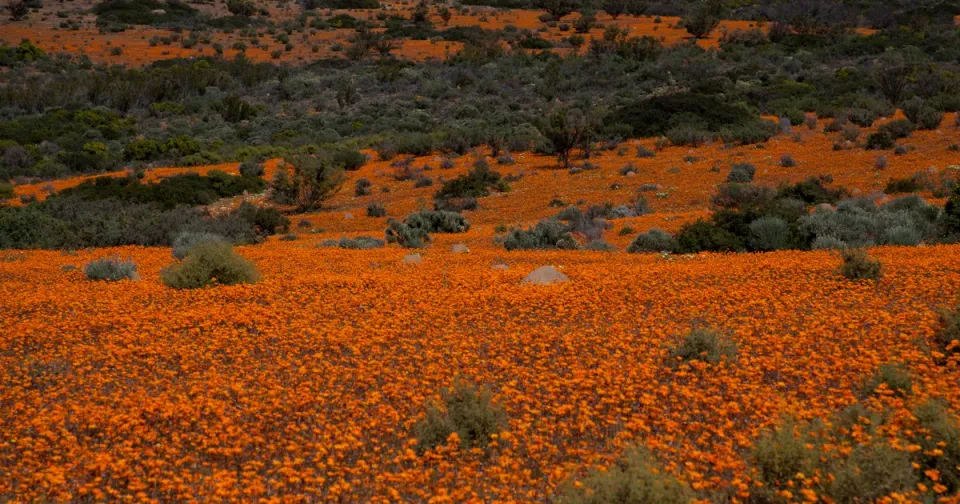
- Richtersveld Cultural and Botanical Landscape (Cultural; inscribed 2007): This rugged mountain desert in the Northern Cape is home to the Nama people, who still follow a semi-nomadic way of life, live in portable rush-mat houses called haru oms (matjieshuise) and manage the land communally as their ancestors did.
- ǂKhomani Cultural Landscape (Cultural; inscribed 2017): Covering part of the Kalahari Desert in the Northern Cape, this landscape preserves the knowledge and traditions of the ǂKhomani San, who have lived in this harsh environment for millennia and safeguarded their hunter-gatherer culture and deep understanding of nature.
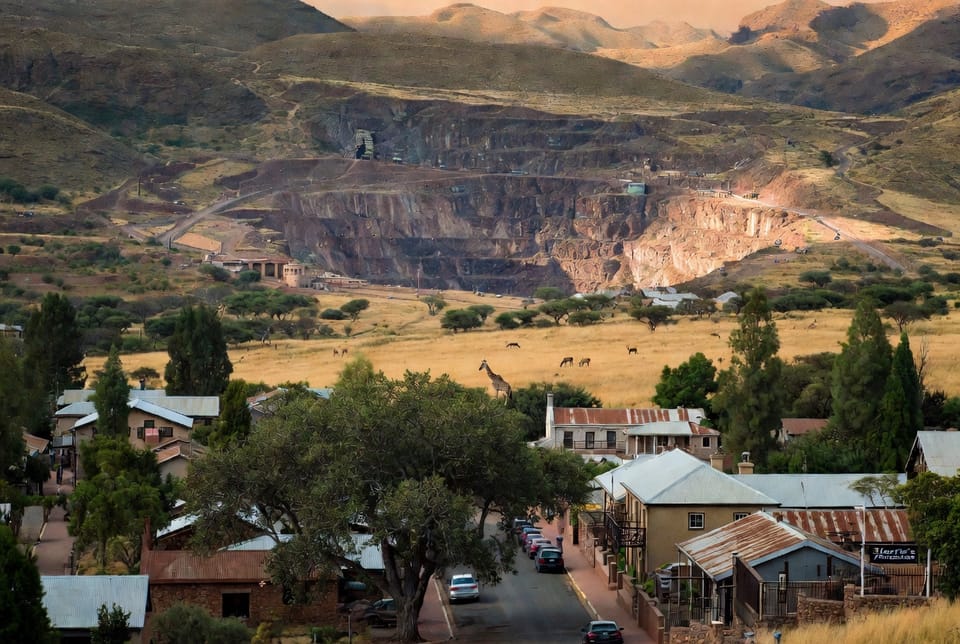
- Barberton Makhonjwa Mountains (Natural; inscribed 2018): In Mpumalanga, these mountains contain some of the oldest and best-preserved rocks on Earth, dating back 3.6 to 3.25 billion years. They reveal clues about the early formation of continents and the conditions in which the first life arose.
- Human Rights, Liberation and Reconciliation: Nelson Mandela Legacy Sites (Cultural; inscribed 2024): This serial site links 14 locations central to South Africa's 20th-century struggle for human rights, among them the Union Buildings, Constitution Hill, Liliesleaf, Sharpeville and Walter Sisulu Square.
- The Emergence of Modern Human Behaviour: The Pleistocene Occupation Sites of South Africa (Cultural; inscribed 2024): These three Middle Stone Age sites, Diepkloof Rock Shelter and the Pinnacle Point complex in the Western Cape, and Sibhudu Cave in KwaZulu-Natal, preserve some of the earliest evidence of symbolic thought and modern human behaviour.
From two-billion-year-old craters to the cradle of humanity and the legacy of Nelson Mandela, South Africa's twelve World Heritage Sites span an extraordinary sweep of natural and human history and every one of them is open to visitors.
What do you think?
Join the conversation on our South African community forum. Share your perspective, ask a question, or just say hello.