South Africa's Climate Guide: Discover the Country's Unique Climatic Zones
South Africa has one of the most varied climates on the African continent, ranging from a Mediterranean climate in the south-west and humid subtropical conditions along the east coast, to temperate highland climates over the interior plateau and a true desert in the north-west. The single most widespread climate, however, is semi-arid (steppe), which blankets much of the interior, including the vast Karoo.[2] This diversity, shaped by altitude, latitude and two contrasting ocean currents, produces dramatically different conditions within relatively short distances.
📍 What climate zone are you in?
Works for locations within South Africa only. Your location is not stored or sent anywhere.
South Africa's main climate zones
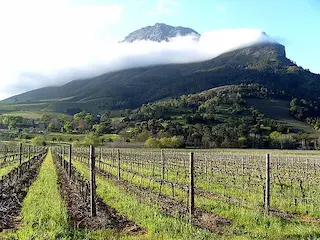
- Mediterranean (south-western Cape): Warm, dry summers and cool, wet winters around Cape Town, the only substantial winter-rainfall region in the country.[1]
- Semi-arid / steppe: The largest climate zone, covering the interior plateau and the Karoo, with hot days, cold nights and low, erratic rainfall.[2]
- Humid subtropical (east coast): Warm, humid and lush around Durban and the KwaZulu-Natal coast, kept mild by the warm Agulhas Current.[2]
- Temperate highland (Highveld interior): Found around Johannesburg and the high interior, with warm summers, crisp sunny winters and cold nights. Those windless winter days also trap pollution near the surface, which is what drives the Highveld's winter air quality problem.
- Desert (north-west): The arid fringe toward Namibia, including the Richtersveld, where rainfall is minimal.[2]
The seasons in South Africa
Because South Africa lies in the Southern Hemisphere, its seasons are the reverse of those in Europe and North America, with midwinter falling in the middle of the year and high summer over December and January.[1]
Summer (December–February): Hot across most of the country, with afternoon thunderstorms over the interior and east coast, while the south-western Cape stays warm and dry.[1]
Autumn (March–May): Often regarded as the most pleasant season, with warm, settled days and cool nights as the summer rains taper off.[1]
Winter (June–August): Dry and sunny over most of the interior, with cold nights and frost; the south-western Cape receives its main rainfall now, while the Drakensberg and high interior can see snow.[1]
Spring (September–November): A burst of new growth and wildflowers, spectacularly so in Namaqualand, as temperatures climb back toward summer.[1]
Rainfall: a comparatively dry country
South Africa is a notably dry country. Its average annual rainfall is about 464 mm, roughly half the world average of around 860 mm.[1][2] Most of the country is a summer-rainfall region, with rain falling between about October and March and increasing from the dry west to the wetter east.[1] The exception is the winter-rainfall south-western Cape, where the Mediterranean climate brings gentle rain mainly between May and August while summers stay dry.[1]
Those are regional averages. For how many days a month it actually rains in your own town, the Chance of Rain Calculator works it out from 46 years of daily rainfall, by month, for 29 South African towns.
That rainfall pattern isn't steady from one year to the next. It shifts with the El Niño Southern Oscillation, swinging between wetter La Niña years and drier El Niño years, and a new El Niño is currently strengthening, raising the odds of a hotter, drier summer over the interior for the 2026/27 season. See our Season Rainfall Tracker for how the most recent La Niña season actually played out, town by town.
Two oceans, two currents
South Africa's coastline is shaped by two opposing ocean currents. The warm Agulhas Current flows south down the east coast, while the cold Benguela Current flows north up the west coast.[2] The result is a striking contrast between a warm, subtropical Indian Ocean coast and a cool Atlantic one, with at least a 6 °C difference in average temperatures between Durban in the east and Port Nolloth in the west.[2] The two oceans are popularly said to meet at Cape Agulhas, the southernmost point of Africa.
Frost and the cold interior
Contrary to a common misconception, South Africa's coldest temperatures and heaviest frost occur not on the coast but across the high-altitude interior, including the Highveld, the Drakensberg and the Roggeveld mountains.[3] The Northern Cape town of Sutherland is widely regarded as the coldest in the country, with winter nights regularly dropping to around −10 °C.[3] The lowest temperature ever recorded on the South African mainland was −20.2 °C, at the farm Buffelsfontein near Molteno in the Eastern Cape.[3] Cape Town and the coastal lowlands, by contrast, very rarely experience frost.
Outdoor activities for every season
South Africa's varied climate makes it a year-round outdoor destination. From white-water rafting and hiking in the warm summer months to diving, surfing and game viewing in the cooler, drier season, there is something for every traveller. A good grasp of the country's climate patterns is the key to planning the perfect time to visit each region.
Sources
- South Africa's weather and climate, South Africa Gateway
- Climate of South Africa, Wikipedia
- South Africa's hottest and coldest places, 4x4 Afrika
🏠 Thinking about where to live in South Africa?
If the climate guide has you wondering which part of the country suits you best, the Semigration Town Finder lets you weigh climate alongside governance, affordability, schools and job access across 36 popular destinations.
What do you think?
Join the conversation on our South African community forum. Share your perspective, ask a question, or just say hello.