Richtersveld National Park: South Africa's Arid Biodiversity Hotspot
South Africa's most remote national park is a mountain desert of quiver trees, fog-fed succulents and living Nama heritage on the wild Orange River.
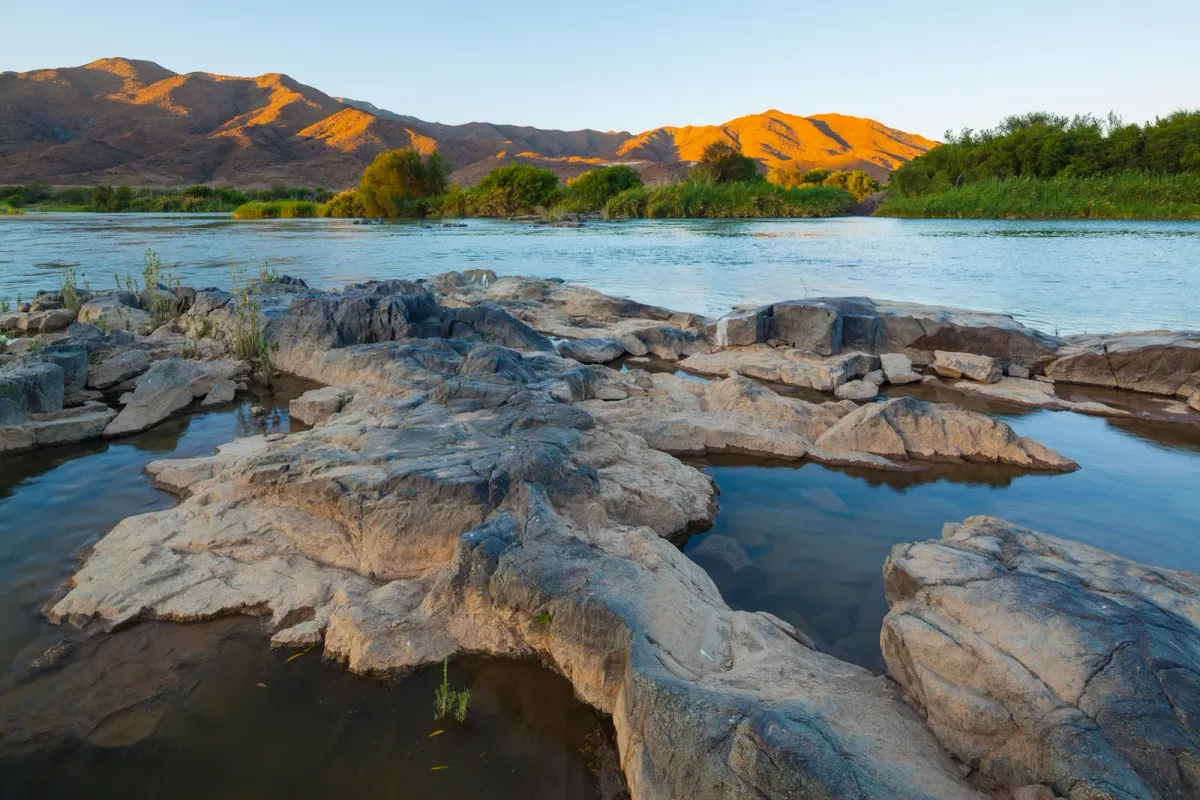
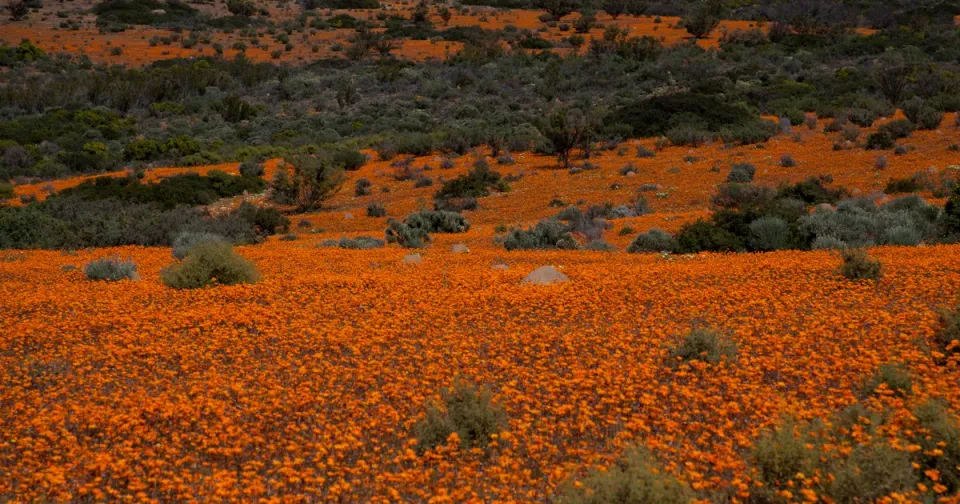
The Richtersveld is one of South Africa's great hidden corners, a mountainous desert in the far north-western tip of the Northern Cape where the land looks scorched and lifeless at first glance, yet hides one of the richest desert ecosystems on Earth. Jagged peaks, sun-baked plains and deep ravines roll down to the Orange River, which carves a green ribbon along the park's northern edge and forms the border with Namibia. It is harsh, remote and quietly spectacular, the kind of place that rewards the long drive it takes to get there.
The Richtersveld sits at the heart of the Succulent Karoo, the only entirely arid region on the planet to be recognised as a global biodiversity hotspot. That is the real headline: a desert so dry it looks hostile to life, yet home to an astonishing concentration of plants and animals found nowhere else.
The fog that feeds a desert
Rain is rare here, so life leans on a different kind of moisture. Most mornings a cool fog known to local people as the 'Ihuries' or 'Malmokkies' drifts inland off the cold Atlantic, beading on leaves and stone and giving the desert just enough to survive on. This thin daily lifeline sustains a remarkable cast of plants, birds, reptiles and small mammals, many of them specialists that live only in this region.
The plants steal the show. Gnarled quiver trees and tall aloes stand like sculptures across the slopes, and then there is the Halfmens (Pachypodium namaquanum), the "half-human tree". These strange, leaning succulents grow on rocky ridges with their crowns tilted to the north, and Nama tradition holds that they are ancestors caught forever gazing back toward the northern lands the people once came from.
A park built on partnership
The northern Richtersveld was proclaimed a national park in 1991, and the story behind it is as remarkable as the scenery. It became South Africa's first contractual national park, created after roughly eighteen years of negotiation with the local Nama community. Rather than being moved off their land, the Nama lease it to South African National Parks and still graze livestock here, co-managing the park to this day.
That bond with the land runs deep. The San hunted and gathered across this region thousands of years ago, and the Nama who followed still practise a transhumant way of life, moving seasonally with their goats and sheep in search of grazing. Few national parks anywhere remain such a working part of a community's everyday life.
One park, two countries
In 2003 the Richtersveld National Park was joined with Namibia's Ai-Ais and Fish River Canyon reserves to create the Ai-Ais/Richtersveld Transfrontier Park, a single conservation area straddling both banks of the Orange River. This is where a common mix-up creeps in. The famous Fish River Canyon, often described as one of the largest canyons in the world, lies on the Namibian side of this transfrontier park, not within the South African Richtersveld section. The two are linked at Sendelingsdrift by a small river pont, a cable ferry that carries vehicles across the Orange River between the countries.
A World Heritage Site next door
Just south of the park lies a separate but related treasure. In 2007 the Richtersveld Cultural and Botanical Landscape was inscribed as a UNESCO World Heritage Site. It is not part of the national park; it is a community-owned conservancy of around 160,000 hectares, owned and run by the Nama themselves. Its World Heritage status celebrates a living culture as much as the scenery, because this is one of the last places where the Nama still build the portable domed rush-mat houses, the haru oms, and follow seasonal grazing patterns that may stretch back two thousand years.
Extraordinary biodiversity
The numbers tell part of the story. The broader Richtersveld is home to somewhere around 2,700 plant species, hundreds of which grow nowhere else on Earth, making it one of the richest desert floras in the world. The wider area holds close to a third of all of South Africa's succulent plant species. Among the rarest is the Giant Quiver Tree, also called the Bastard Quiver Tree (Aloidendron pillansii, formerly Aloe pillansii), a towering cousin of the common quiver tree that is now critically endangered, holding on across a handful of remote mountain slopes in the Richtersveld and just over the border.
Getting there and where to stay
The park lies roughly 320 kilometres from Springbok, the nearest large town, and the journey is part of the adventure. The main gate and rest camp are at Sendelingsdrift, and while the approach roads have improved, a high-clearance 4x4 is essential for exploring the rugged interior tracks.
Accommodation is more varied than the park's remoteness suggests. Sendelingsdrift Rest Camp has self-catering chalets, and the Tatasberg and Gannakouriep wilderness camps offer simple off-grid chalets deeper inside the park. For those who would rather sleep under the stars, there are rustic campsites at Potjiespram, De Hoop, Richtersberg, De Koei and Kokerboomkloof, several of them set along the Orange River. The cooler months from autumn through spring are by far the most comfortable time to visit, as summer temperatures here can be punishing.
Reaching the Richtersveld takes real effort, and that is exactly why it stays so wild. For travellers willing to make the trip, it rewards them with some of the most striking desert scenery, the richest plant life and the most genuine cultural encounters anywhere in South Africa.
What do you think?
Join the conversation on our South African community forum. Share your perspective, ask a question, or just say hello.