Discover Karoo National Park: A Treasure Trove of Palaeontology and Wildlife in South Africa
A guide to South Africa's Karoo National Park near Beaufort West: 250-million-year-old fossils, reintroduced lions, Cape mountain zebra, birding and things to do.
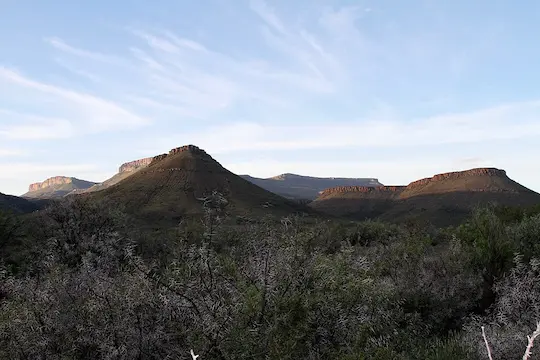
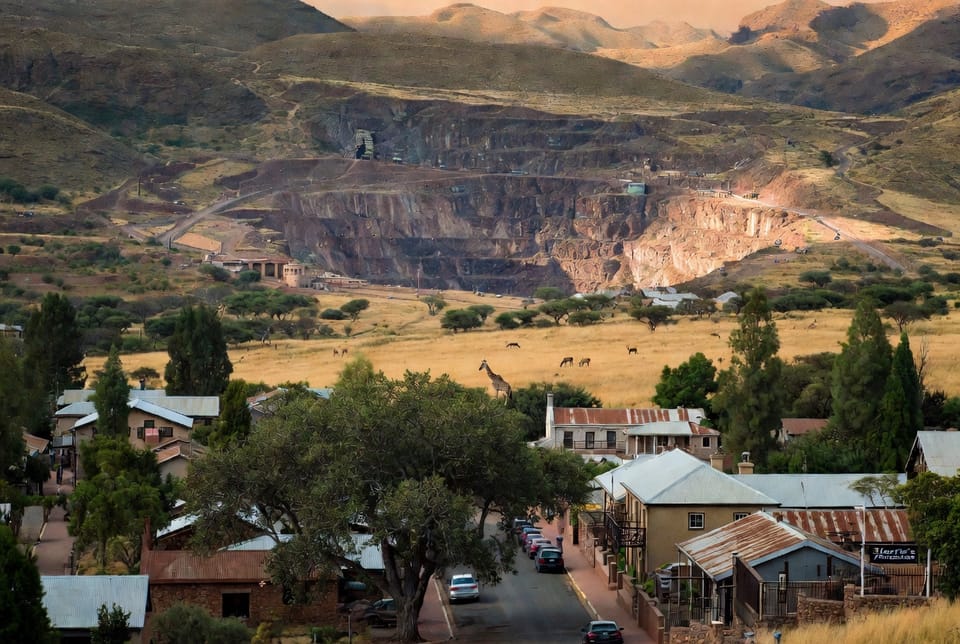
Tucked beneath the rugged Nuweveld Mountains just outside Beaufort West, the Karoo National Park is one of South Africa's great open-air time capsules. Spanning roughly 90,000 hectares of the Great Karoo, it pairs sweeping semi-arid scenery and reintroduced wildlife with a fossil record that reaches back a quarter of a billion years. Its Fossil Trail, a 400-metre, wheelchair-accessible interpretive walk with Braille panels, lets you read that deep history straight from the rock.
Where is the Karoo National Park?
The park lies in the Western Cape, on the doorstep of Beaufort West and right alongside the N1, making it an easy break on the long drive between Cape Town and Johannesburg. It is about a 4.5-to-5-hour drive (roughly 460 km) from Cape Town. Covering around 90,000 hectares (88,133 ha), it protects a representative slice of the Nuweveld escarpment, from the plains up to high plateau.
A window into deep time: the fossils of the Karoo
The Karoo's rocks preserve one of the world's richest records of the therapsids, the "mammal-like reptiles" that lived roughly 250 million years ago when this region was part of the supercontinent Gondwana. These animals sit on the evolutionary line that eventually led to mammals, which makes the Karoo internationally important to palaeontology.
You can get a feel for it on the park's Fossil Trail, where real fossils and petrified wood are visible along the route, with interpretation designed to be accessible to all visitors, including those who are blind or use wheelchairs.
To see the wider collections, South Africa's natural-history museums are well worth a visit:
- The Iziko South African Museum in Cape Town holds more than 1.5 million specimens of scientific importance, including one of the country's richest collections of Karoo fossils.
- The Albany Museum in Makhanda (formerly Grahamstown), the Ditsong National Museum of Natural History in Pretoria (the former Transvaal Museum), and the National Museum in Bloemfontein all hold significant Karoo material.
- The Evolutionary Studies Institute at the University of the Witwatersrand (Wits), formerly the Bernard Price Institute for Palaeontological Research, curates one of the largest fossil collections in Africa, with extensive Karoo vertebrate holdings.
- Even smaller institutions matter. The Old Library Museum in Graaff-Reinet holds a notable collection assembled by amateur palaeontologist Lex Bremer, including the remains of various herbivorous and carnivorous mammal-like reptiles.
Found a fossil? Leave it in the rock
If you come across a fossil during your visit, don't try to dig it out. Note its exact location, photograph it if you can, and report it to the Karoo Palaeontology department at the Iziko South African Museum or another natural-history museum. Trained staff can excavate and preserve it properly, so the find adds to the scientific record rather than being lost.
Wildlife of the Karoo National Park
The park is home to around 66 mammal species, many of them reintroduced after historic populations were hunted out. Animals you might encounter include:
- Lions: a small population was reintroduced in 2010, returning free-ranging lions to the Great Karoo after an absence of roughly 170 years (the last wild lion in the area was shot near Leeu-Gamka in 1842).
- Cape mountain zebra: a conservation success story here, with a healthy population. They are easily told apart from plains (Burchell's) zebra by the absence of faint "shadow" stripes between the bold black bands.
- Black rhinoceros: the park forms part of the effort to protect this critically endangered species.
- Buffalo: also reintroduced as part of restoring the park's historic species.
- Eland: the largest antelope in Africa.
- Red hartebeest: a fast, free-running antelope well suited to the open plains.
- Springbok: this medium-sized antelope is a national symbol of South Africa and is often seen in good numbers.
- Riverine rabbit: one of the world's most endangered mammals, successfully resettled in the park.
The Karoo National Park is also a reptile stronghold, with five tortoise species, the highest tortoise diversity of any park in the world.
Birdlife
With more than 200 recorded bird species, the park is a rewarding birding destination and a noted bird-of-prey hotspot. Look out for Verreaux's eagle, the pale chanting goshawk and the Karoo korhaan, among many others.
Things to do
- Self-drive the game-viewing roads, or tackle the scenic Klipspringer Pass up onto the plateau for wide Karoo views.
- Walk the accessible Fossil Trail for a hands-on introduction to the area's geology and palaeontology.
- Take a guided game drive, or, with a high-clearance vehicle, explore the 4x4 eco-trail.
- Stay over at the main rest camp and enjoy the Karoo's famously dark, star-filled night skies.
Nearby parks and reserves
If you're exploring the region, combine your trip with other conservation areas that showcase South Africa's commitment to protecting its natural heritage:
- Mountain Zebra National Park near Cradock, established to protect the Cape mountain zebra.
- Camdeboo National Park around Graaff-Reinet (formerly the Karoo Nature Reserve), home to the dramatic Valley of Desolation.
Frequently asked questions
Where is the Karoo National Park?
It is in the Western Cape, just outside Beaufort West alongside the N1, about 460 km (4.5 to 5 hours) from Cape Town.
Are there lions in the Karoo National Park?
Yes. Lions were reintroduced in 2010 and once again roam the Great Karoo after an absence of roughly 170 years.
What can I see on the Fossil Trail?
Real fossils and petrified wood set in the landscape, with interpretation covering the Karoo's 250-million-year-old "mammal-like reptiles." The 400-metre trail is wheelchair accessible and includes Braille panels.
Can I self-drive in the park?
Yes. There are game-viewing roads and the tarred Klipspringer Pass for ordinary vehicles, plus a 4x4 eco-trail for high-clearance vehicles.
Last updated: 21 May 2026.
What do you think?
Join the conversation on our South African community forum. Share your perspective, ask a question, or just say hello.