Unearth the Treasures of South African Wines: A Blend of Rich Heritage and Distinctive Flavors
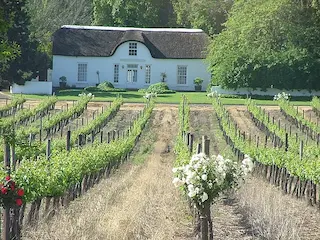
Embark on a journey through the unique flavours and rich heritage of South Africa's wines. While the Cape's vineyards stretch back more than 350 years, it was the transformative 1990s, following the end of apartheid and the lifting of international sanctions under Nelson Mandela, that finally unveiled the allure of South African wine to the wider world.
From the Cape's first harvest
South African winemaking began on 2 February 1659, when Dutch Cape commander Jan van Riebeeck recorded in his diary that "wine was made for the first time from Cape grapes." That maiden vintage yielded barely a dozen bottles.[1] A generation later, in 1685, Governor Simon van der Stel founded Groot Constantia, today the country's oldest wine estate. Its sweet Constantia wine went on to become one of the most prized wines in the world, shipped to European royalty and famously requested by Napoleon during his exile on St Helena.[2]
South Africa is celebrated for its substantial production volumes, yet it is the classic red varieties that truly captivate enthusiasts. These wines reflect the strong influence of French viticulture, sparking an ongoing debate among local vintners between the refined elegance of Old World wines and the enticing fruitiness of New World styles.
Decline and revival
In the 1950s, Cape producers were among the New World's technical pioneers, introducing cellar techniques such as cold fermentation that produced fresher, more aromatic white wines.[3] Decades of isolation under apartheid-era sanctions then took their toll on quality, but the early 1990s brought a triumphant return to international markets, driven by competitive pricing and exotic appeal. Exports surged from around one million cases a year in the early 1990s to more than 300 million litres today.[4]
The revival attracted ambitious young winemakers, established businessmen and major corporations, who transformed the landscape with state-of-the-art cellars and well-sited vineyards. A wave of boutique wineries and international partnerships followed, among them Burgundy's Paul Bouchard teaming with Pinot Noir and Chardonnay specialist Bouchard Finlayson in Walker Bay, and the revitalisation of the historic Stellenbosch estate Morgenhof by the French Cointreau family.
Wine of Origin and the signature grapes
Today Cape winemakers are free to plant any variety in any location. The "Wine of Origin" seal on a label certifies where the grapes were grown, typically traditional regions such as Stellenbosch, Paarl, Franschhoek, Constantia, Walker Bay, Wellington, Robertson and Worcester.[5]
Cabernet Sauvignon plays a pivotal role in South African reds, with Merlot popular both as a blending partner and on its own. Pinotage, the country's signature variety, is not a blend but a uniquely South African grape, bred in 1925 by Professor Abraham Perold by crossing Pinot Noir with Cinsaut.[6] It has won over wine lovers worldwide with its bold, versatile flavours.
Among the whites, Chenin Blanc leads the way: South Africa has more Chenin Blanc planted than any other country, much of it known locally as "Steen."[5] The country's Chardonnay has matured from the heavily oaked styles of the 1990s into more elegant, complex wines, while Sauvignon Blanc from cool-climate sites marries fresh New World character with Loire-like delicacy. South Africa is also celebrated for Methode Cap Classique, its traditional-method sparkling wine produced the same way as Champagne.[7]
Where to start
South Africa's wine regions offer remarkable diversity. Stellenbosch is renowned for both reds and whites, Franschhoek for premium whites, and Constantia for the historic sweet Muscat wines that first made the Cape famous, alongside crisp modern Sauvignon Blanc.[2] The Calitzdorp region in the Klein Karoo, a fair drive from Cape Town, is recognised as South Africa's port-wine capital. Any of these makes an excellent place to begin, ideally with a glass in hand and a plate of South African cuisine.
Sources
- Wines of South Africa, Three Centuries of Cape Wine
- Constantia (wine), Wikipedia
- History of South African Wine, Wikipedia
- South Africa wine exports 2024, Just Drinks
- South African Wine, Wikipedia
- Pinotage, Wikipedia
- Methode Cap Classique, Wikipedia
What do you think?
Join the conversation on our South African community forum. Share your perspective, ask a question, or just say hello.