Garden Route Road Trip: How to Plan the Perfect Drive
Everything you need to plan a Garden Route road trip: the best stops west to east, when to go, how long you need, and what to know about driving the N2.
The Garden Route is the drive most South Africans put on their list and then keep putting off. That is a shame, because it is one of the easiest big trips you can do in this country. The road is good, the towns are close together, and you can fill a long weekend or a full week without ever feeling like you are wasting a day.
This guide is for planning, not dreaming. Here is what the route actually is, how long you really need, when to go, and what to stop for along the way.
What and where is the Garden Route
The Garden Route is a stretch of coast roughly 300 kilometres long, running along the N2 from Mossel Bay in the Western Cape to the Storms River area on the edge of the Eastern Cape. It is named for the green belt of forest, lakes and fynbos squeezed between the Outeniqua and Tsitsikamma mountains and the Indian Ocean.
If you drove it without stopping, you could cover the whole thing in about three to four hours. Nobody does that, and you should not either. The point of the Garden Route is the stops.
Much of the coastline falls inside the Garden Route National Park, which is managed by SANParks across three sections: Wilderness, Knysna and Tsitsikamma. You will pass through all three.
How many days do you need
The honest answer is anywhere from three to seven days, and the sweet spot for most people is five.
- Three days: a fast taste. Base yourself in Knysna, do a day around the lagoon, a day in Plettenberg Bay, and a day in Tsitsikamma.
- Five days: the comfortable version. Two nights around Knysna or Plett, time for a proper hike, a whale or dolphin boat trip, and the suspension bridge without rushing.
- Seven days: add Mossel Bay properly, an inland detour to Oudtshoorn, and a slow morning or two doing nothing.
The towns are close, so most driving legs are under an hour. That is what makes the route so forgiving. You are never far from the next place to sleep.
When is the best time to go
The Garden Route is green because it gets rain in every season, so there is no truly bad month. That said, the timing changes the trip quite a bit.
Spring and autumn (September to October, March to April) give you the best balance. Mild days, thinner crowds, lower prices, and the landscape at its lushest. If you want one window, this is it.
Summer (December to January) is warm and beautiful, and also when the whole of South Africa goes on holiday. Beaches are busy, accommodation books out months ahead, and prices climb. Book early or avoid the school holidays.
Winter (June to August) surprises people. Yes, it rains and the sea is cold, but there are plenty of clear, crisp days that are perfect for hiking, and the towns are quiet. It is also whale season.
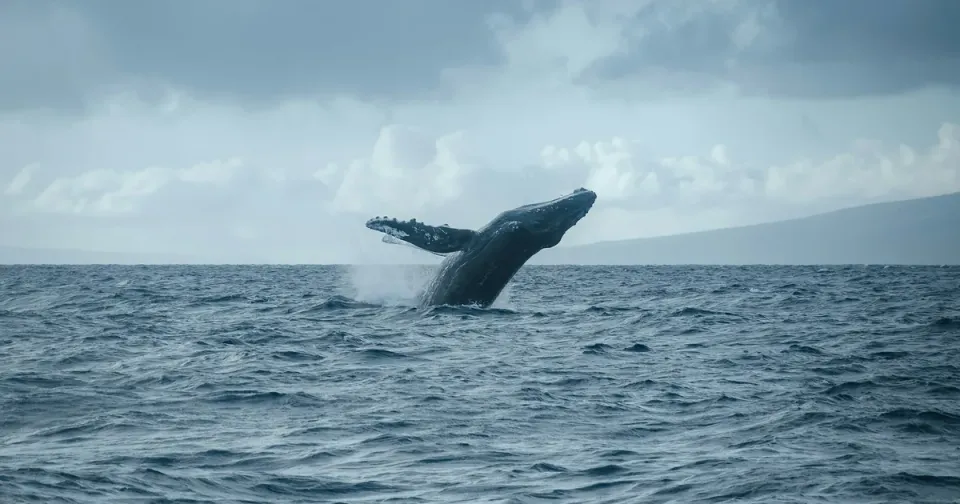
On whales, southern right whales move along this coast from roughly June to November to calve, with the best viewing in September and October. Plettenberg Bay is the easiest place to see them, from the cliffs or on a boat trip.
If you can line your dates up with the Knysna Oyster Festival (3 to 12 July 2026), you get ten days of food, sport and music, plus prime whale season next door in Plett. Just know the town is full and busy during the festival.
The route, west to east
Most people drive the Garden Route from the Cape Town side heading east, so that is how we will run it.
Mossel Bay
Mossel Bay is the official western gateway, and it is more than just a fuel stop. This is one of the oldest pieces of human story on the planet: the caves at Pinnacle Point, often called the Point of Human Origins, hold evidence of how early humans lived off the sea more than 150,000 years ago, and you can visit them on a guided walk. The town also has a swimmable beach, a working harbour, and the Bartolomeu Dias maritime history in the museum complex. It is an easy first or last night.
George and Wilderness
George is the biggest town on the route and the place most people fly into, with the only commercial airport in the area. It is practical rather than pretty, a good spot to pick up a hire car or stock the cooler box.
Just past George the road drops into Wilderness, and this is where the Garden Route starts to look like the postcards. Pull in at the Map of Africa viewpoint, where the Kaaimans River has carved the land below into something close to the shape of the continent. Wilderness itself is all lakes, forest and a long beach, with gentle canoe trails and short walks in the national park.
Sedgefield
Sedgefield calls itself Africa's first official Slow Town, and it leans into it. The big draw is the Wild Oats Community Farmers Market on Saturday mornings, one of the best food markets on the route. Time your drive to land here on a Saturday and have breakfast among the stalls. The beaches are long, quiet and good for a walk.
Knysna
Knysna is the heart of the Garden Route and where many people choose to base themselves. The town sits on a large lagoon that opens to the sea through the Knysna Heads, two dramatic sandstone cliffs. Drive or walk up to the eastern Head for the view, and respect the warnings about the channel, because the water between the Heads is genuinely dangerous.
The other classic Knysna outing is the Featherbed Nature Reserve on the western Head, which you reach by ferry across the lagoon followed by a guided drive and a short walk. Knysna is also oyster country, so this is the place to try them, festival or not. If you are travelling with children, the Knysna Elephant Park and the free-roaming primate sanctuaries at Monkeyland and Birds of Eden are nearby and reliably popular.
Plettenberg Bay
Plett, half an hour east of Knysna, is the route's beach-holiday town, with wide, swimmable bays and the smartest accommodation on the coast. The standout is the Robberg Nature Reserve, a rocky peninsula with a Cape fur seal colony and a hiking trail along the cliffs. You can do a short loop or the full four-hour circuit. Bring water and proper shoes, because there is no shade and the rock gets hot.
Plett is also the best base for getting onto the water. Boat trips head out for whales, dolphins and seals through the season, and it is one of the few places where southern right whales come close enough to see from a small boat.
Nature's Valley and Tsitsikamma
The eastern end is the wild end. The road climbs into the Tsitsikamma forest, where the indigenous trees are tall and old and the gorges are deep. Tucked below the pass is Nature's Valley, a tiny village hemmed in by forest and a long empty beach, the kind of place with no shops to speak of and that is the whole point.
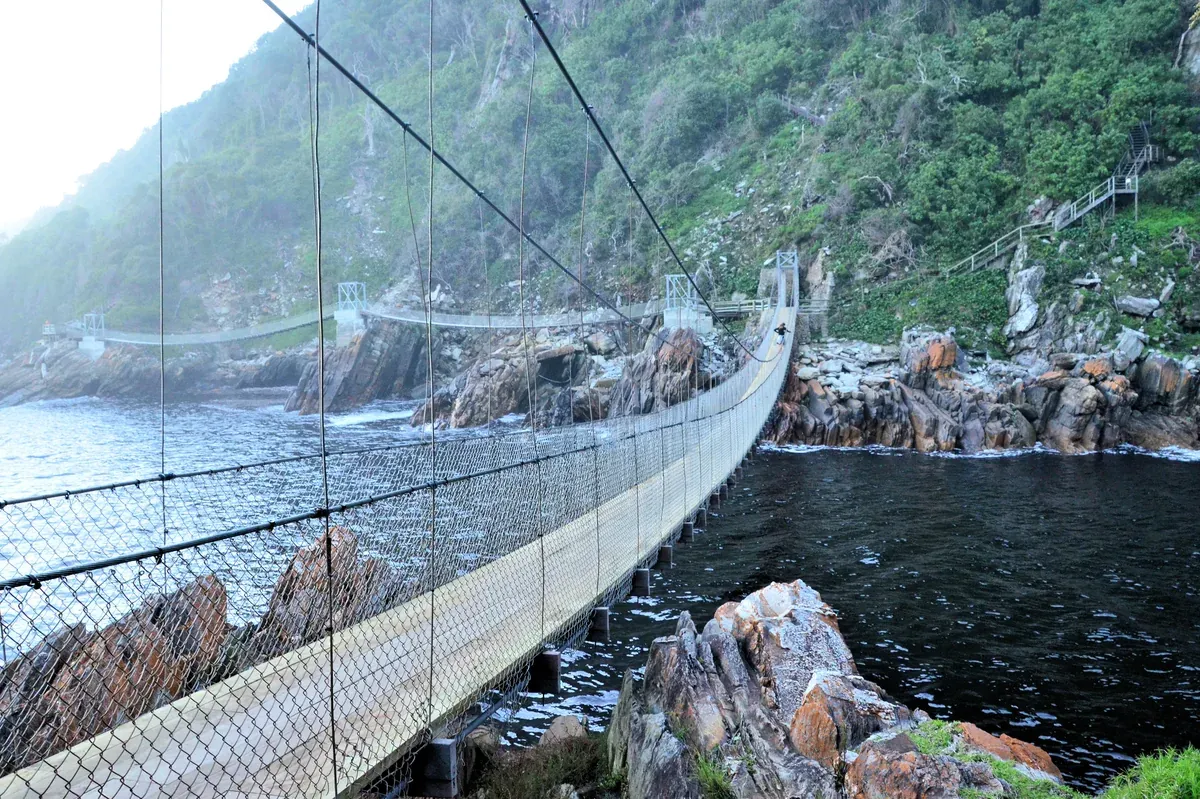
The signature stop is the Storms River Mouth in the Tsitsikamma section of the national park. A boardwalk leads through the forest to a suspension bridge that crosses the river where it meets a churning sea. The walk is short and mostly easy, and the setting is one of the most photographed spots in the country. You pay a SANParks conservation fee to enter, somewhere around R80 for a South African adult, though the exact rate changes each November, so check the current SANParks tariff before you go.
Just before the park, on the N2, is the Bloukrans Bridge, home to the world's highest commercial bridge bungee jump at 216 metres. Face Adrenalin has run it commercially since 1997. Even if you have no intention of jumping, it is worth pulling in to watch someone else do it.
Worth the detour: Oudtshoorn and the Cango Caves
If you have a spare day, turn inland. From George the N12 climbs over the Outeniqua Pass to Oudtshoorn, about 55 kilometres away in the semi-desert Klein Karoo. This is ostrich country, and the show farms will let you get closer to the world's largest bird than you might want to.
Nearby are the Cango Caves, a huge limestone cave system with guided tours ranging from an easy walk to a tight, sweaty adventure crawl that is not for anyone who dislikes small spaces. The drive in over the pass is half the reward. You can do an ostrich farm and the caves in a single morning and be back on the coast by evening.
Driving, tolls and staying safe
The good news for planning: you do not need anything special to drive the Garden Route. The N2 is tarred the whole way and a normal hire car handles it easily, so there is no need for a 4x4 unless you want one for game reserves.
A few practical notes:
- Tolls. You will pass through a toll or two on the N2. Most plazas take cards, but card machines are not always reliable for international cards, so carry some cash to be safe. You can work out your costs in advance with our toll fees calculator.
- Fuel. Stations are frequent in the towns but thin on the ground between them, and many are cash-or-card attended forecourts. Fill up when you are at half a tank rather than gambling on the next town.
- Drive in daylight. The roads are well maintained, but rural stretches are unlit and you can meet wildlife, livestock or pedestrians after dark. Plan your legs to arrive before sunset.
- Car hire. Book ahead in peak season, take the rental company's insurance unless your own travel cover is solid, and check the spare tyre before you leave the depot.
- Normal city sense. Lock up, keep bags out of sight, and use guarded parking in town centres. The route is safe for self-drive, and a little caution keeps it that way.
Where to base yourself
You do not have to repack every night. Many people split the route into two bases:
- A western base around Wilderness, Sedgefield or Knysna for Mossel Bay, the lakes and the lagoon.
- An eastern base in Plettenberg Bay for Robberg, the boat trips and Tsitsikamma.
Two nights in each cuts the daily packing and still puts everything within an easy drive. If you only want one base, Knysna sits closest to the middle and reaches almost everything inside an hour.
A simple five-day plan
For anyone who just wants a starting point:
- Day 1: Arrive in George or Mossel Bay, settle in, walk on the beach.
- Day 2: Drive east through Wilderness and Sedgefield, stop at the Map of Africa, sleep in Knysna.
- Day 3: Knysna Heads, Featherbed ferry, oysters by the lagoon.
- Day 4: Move to Plett, hike Robberg or take a whale-watching boat.
- Day 5: Tsitsikamma, the Storms River suspension bridge, Bloukrans on the way.
Stretch it to seven by adding Oudtshoorn and a slow day, or compress it to three by cutting straight to Knysna and Tsitsikamma.
Frequently asked questions
How long does it take to drive the Garden Route?
The road itself is only about three to four hours end to end, but you will want three to seven days to actually see it. Five days suits most people.
Do I need a 4x4?
No. The N2 is tarred the whole way and an ordinary car is fine. A 4x4 only helps if you plan to visit private game reserves off the main road.
When is the best time to go?
September to October and March to April give the best mix of good weather, fewer crowds and lower prices. December and January are warm but busy and expensive. Winter is quiet and good for hiking and whales.
Can I see whales?
Yes, from about June to November, with September and October the peak. Plettenberg Bay is the easiest spot, from the cliffs or on a boat.
Is it safe to drive the Garden Route on your own?
Yes. It is one of South Africa's most popular self-drive routes. Stick to the main roads, drive in daylight, keep valuables out of sight, and you will be fine.
Which way should I drive it?
Either direction works. Most people go west to east, starting near Cape Town or flying into George and ending towards the Eastern Cape.
What do you think?
Join the conversation on our South African community forum. Share your perspective, ask a question, or just say hello.