Archbishop Desmond Tutu: A Beacon of Hope and Reconciliation in the Rainbow Nation
Explore the life, achievements and enduring legacy of Archbishop Desmond Tutu (1931-2021), South Africa's Nobel Peace laureate and the voice of the voiceless.
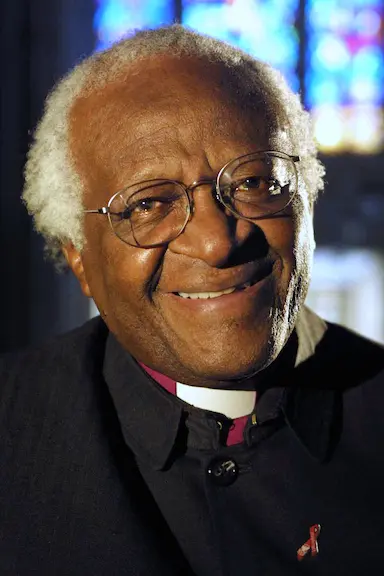
In 2010, South Africa proudly became the first African nation to host the FIFA World Cup. As the world's eyes were fixed on this historic event, a memorable moment unfolded. Archbishop Desmond Tutu, a globally recognised figure and Nobel Peace Prize laureate, took the stage at the kick-off concert held on the eve of the opening ceremony. In a heartwarming display of patriotism, he had swapped his bishop's ceremonial attire for a green-and-yellow striped beanie and scarf, the colours of the South African flag. His joy was palpable as he exclaimed, "It's like I'm dreaming, man, wake me up!"
Archbishop Tutu is renowned worldwide for his eloquent words, his stand against apartheid, and his tireless advocacy for human rights. He is widely credited with coining the phrase "Rainbow Nation" to describe a democratic, multicultural South Africa. Former president Nelson Mandela once described him as: "sometimes strident, often tender, never afraid and seldom without humour, Desmond Tutu's voice will always be the voice of the voiceless."
Early life and calling
Desmond Mpilo Tutu was born on 7 October 1931 in Klerksdorp, in the former Transvaal, and his family moved to Johannesburg when he was 12. His father was a teacher and his mother a domestic worker. Following his father's path, Tutu first trained as a teacher and taught at Johannesburg Bantu High School, but he resigned in 1957 in protest at the Bantu Education Act, which entrenched deliberately inferior schooling for Black South Africans. He then turned to the church, training for the priesthood at St Peter's Theological College in Rosettenville, Johannesburg. He was ordained a deacon in 1960 and a priest in 1961.
By then Tutu was already a family man. In 1955 he married Nomalizo Leah Shenxane, a fellow teacher he had known since his student days; the couple went on to have four children, Trevor, Theresa, Naomi and Mpho. Leah remained his closest partner and confidante throughout his life. During the 1960s Tutu furthered his theological studies in London, earning bachelor's and master's degrees at King's College London, before returning to teach and minister in southern Africa.
Rise to moral leadership
Tutu's rise through the church made him one of apartheid's most prominent opponents. In 1975 he became the first Black Anglican Dean of Johannesburg, and the following year Bishop of Lesotho. From 1978 to 1985 he served as General Secretary of the South African Council of Churches, a role that turned him into a leading national and international voice against apartheid. He consistently preached reconciliation while campaigning for economic sanctions and an end to white-minority rule.
His outspokenness carried a price. The government revoked his passport twice, and in 1980 he was briefly jailed after a protest march. Yet his international stature only grew, and in 1984 he was awarded the Nobel Peace Prize for his non-violent opposition to apartheid. In 1985 he became Bishop of Johannesburg, and in 1986 the first Black person to be enthroned as Archbishop of Cape Town, head of the Anglican Church in Southern Africa. That same year he received the Albert Schweitzer Prize for Humanitarianism.
Tutu's gift for defusing tension was on display during one of the country's most dangerous moments. After the assassination of SACP leader and anti-apartheid hero Chris Hani in April 1993, Tutu addressed a grieving, angry crowd of around 15,000 on Cape Town's Grand Parade. Even as police fired on protesters nearby, he steadied the crowd, leading them in his trademark refrain of hope: "We will be free! All of us, black and white together!"
Truth, reconciliation and a free South Africa
After the first democratic elections in 1994, President Nelson Mandela appointed Tutu to chair the Truth and Reconciliation Commission (1995 to 1998), which investigated the gross human-rights abuses of the apartheid era and sought a path to national healing. He carried out the harrowing work even after being diagnosed with prostate cancer in 1997, a disease he would live with for the rest of his life.
Tutu's honours reflected his global standing. Alongside the Nobel Peace Prize (1984) and the Albert Schweitzer Prize (1986), he received the Gandhi Peace Prize in 2005 and the United States' Presidential Medal of Freedom in 2009. In 2007 he became the founding chair of The Elders, a group of senior global figures, among them Nelson Mandela, Graca Machel, Kofi Annan, Mary Robinson and Jimmy Carter, convened to tackle the world's toughest problems.
Freedom did not silence him. Tutu became an equally fearless critic of the new order, condemning corruption in the governing ANC, denouncing Thabo Mbeki's AIDS denialism, and declaring in 2013 that he could no longer vote for the party. He championed the rights of LGBTQ+ people, famously saying he would not worship a homophobic God, spoke up for Palestinians, and campaigned for the right to assisted dying.
Retirement, death and legacy
In October 2010, around his 79th birthday, Tutu announced his retirement from public life, saying he wished to slow down, spend time with Leah, watch cricket and visit his children and grandchildren. He died on 26 December 2021 in Cape Town at the age of 90. He was honoured with a state funeral at St George's Cathedral and, in keeping with his wish for simplicity, his body was aquamated rather than buried.
Desmond Tutu is remembered as the moral conscience of South Africa, a churchman who fused deep faith with fierce courage and irrepressible humour. The "Rainbow Nation" he named remains his enduring phrase, and his conviction that there is "no future without forgiveness" continues to shape how South Africa understands its past.
What do you think?
Join the conversation on our South African community forum. Share your perspective, ask a question, or just say hello.