South Africa Beat Load Shedding, So Why Isn't the Energy Crisis Over?
Eskom stopped the blackouts, but transmission bottlenecks, coal's slow exit and cable theft show the power problem just moved, not disappeared.
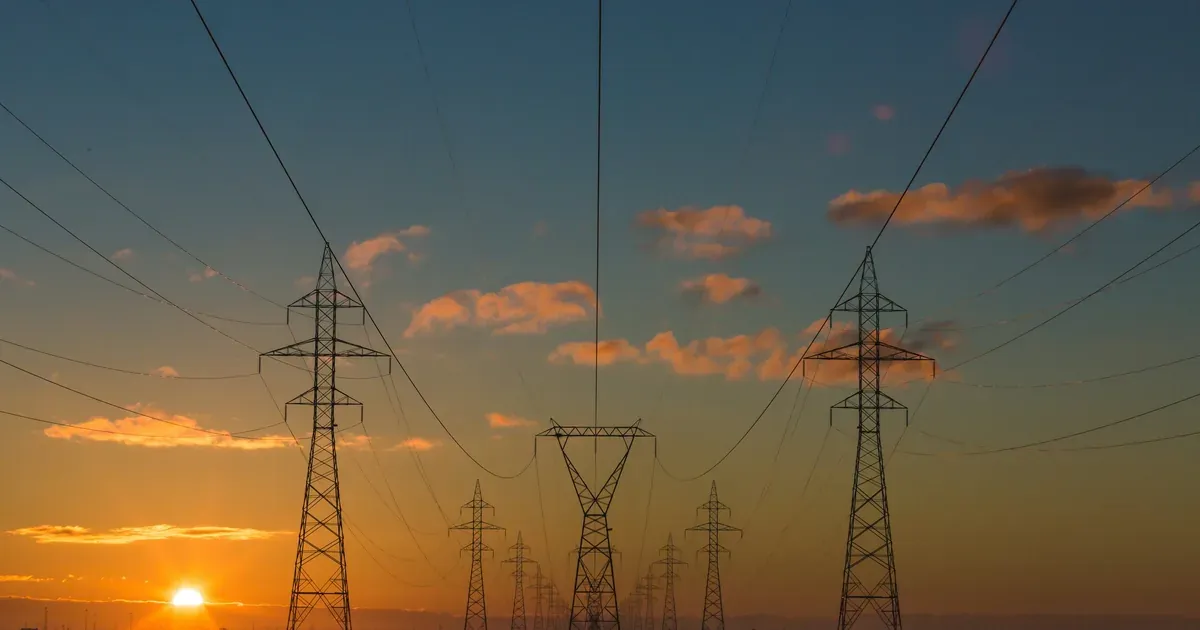
South Africa has now gone more than 400 days without load shedding, comfortably carrying the system through the winter months when demand and breakdowns usually collide, and its longest stretch since 2018. Eskom's own numbers back up why. The utility's fleet has been available above 65% of the time for the financial year to date, unplanned breakdowns are running at roughly half of what they were the year before, and the state of the nation's electricity supply looks, for the first time in over a decade, genuinely calm. That calm is real. It's also not the same thing as energy security, and the closer you look at what's actually holding the system together, the clearer it becomes that South Africa swapped one kind of power crisis for a quieter one.
How Eskom actually turned it around
The headline figure is straightforward: the country's loadshedding-free run began on 16 May 2025 and had reached 413 consecutive days by the end of July 2026, carrying it through Eskom's own winter outlook period, which ran from April to the end of August with no cuts forecast and none delivered. The engineering behind it is less dramatic than the politics around it suggests. Eskom's own reporting shows unplanned outages averaging 7,224MW in the week the utility marked its 300th day without cuts, against 15,382MW in the same week a year earlier, a 53% reduction. Its Unplanned Capacity Loss Factor, essentially the share of the fleet knocked out by breakdowns rather than scheduled maintenance, fell from 32.07% to 14.85% over the same period. None of that came from a single new power station. It came from keeping existing units running for longer between failures, which is unglamorous, plant-level discipline rather than a single fix.
It's worth being honest about what that discipline hasn't done. Eskom's Energy Availability Factor, the share of installed capacity actually available to generate at any given moment, sits at 65.85% for the year, well below the 70% to 75% range the utility itself has set as the real recovery target. Getting from "no load shedding" to "comfortable margin" is a different, harder job, and it's the one still in progress.
A private power boom nobody had to vote for
The generation numbers Eskom doesn't control have moved even faster. When government scrapped the licensing threshold for private generation in 2022, following a smaller step in 2021 that raised the exemption cap from 1MW to 100MW, it opened the door for mines, farms, retailers and factories to simply build their own supply. Private generation projects registered with the energy regulator are now closing in on 20GW, and the pace hasn't slowed: 132 new projects were registered in just the first four months of 2026, adding a combined 1.34GW, with utility-scale wind and solar farms in the 120MW to 250MW range now a routine monthly occurrence in the Free State, Northern Cape and North West.
Layer the state-run Renewable Energy Independent Power Producer Procurement Programme on top of that, now well into its sixth and seventh bidding rounds alongside a dedicated battery storage programme, and you get a genuinely different generation mix to the one that produced a decade of blackouts. The country's newest capacity increasingly isn't Eskom's to switch off. That's a real gain for supply security. It has also created a problem nobody fully planned for.
The new bottleneck isn't power stations, it's wires
All that new solar and wind capacity needs somewhere to send its electricity, and South Africa's grid was built decades ago to move coal power from Mpumalanga outward, not to absorb generation scattered across the Northern Cape, Free State and Eastern Cape. Eskom's own Transmission Development Plan calls for around 14,000km of new high-voltage lines by the mid-2030s, at a cost near R440 billion. The build rate so far has managed roughly 300km a year against a required pace closer to 2,300km, nearly an eightfold gap between what's needed and what's actually going in the ground.
The practical effect is curtailment: Eskom telling already-built wind and solar farms to switch off because the local grid can't carry what they're producing. That's been happening at a much larger scale in 2026, with curtailed volumes in the first six months of the year running roughly ten times higher than for the whole of 2025. Independent power producers report project revenues running about 9% below budget as a result, a gap that eats disproportionately into the thin margins on projects that were competitively bid years ago, and Eskom's backlog in curtailment compensation payments has climbed toward R1 billion. A congestion relief framework approved in 2025 has managed to unlock some capacity, around 3,470MW across the Western and Eastern Cape, but it's also turned grid access itself into contested legal territory: developer Mulilo took Eskom to court late last year over 240MW of disputed transmission capacity, with proceedings still working through the courts in 2026. Building power stations turned out to be the easier half of the problem. Building the wires to match them is the part nobody can accelerate quickly.
Koeberg's twenty extra years
One piece of baseload power did get a genuine, uncomplicated win. Koeberg's two nuclear units, together supplying close to 1,860MW, have both now had their operating licences extended by twenty years, Unit 1 through 2044 and Unit 2 through 2045, after years of refurbishment work and safety reviews by the National Nuclear Regulator. Unit 2 has since run at 100% availability for stretches of over 240 consecutive days, a level of reliability the rest of the fleet can't match. It's a rare example of a long, expensive infrastructure project landing more or less on plan, and it buys the country two decades of dependable, low-carbon baseload that doesn't depend on the weather or the state of the transmission grid.
Coal's exit keeps slipping
The government's newly gazetted Integrated Resource Plan, published in October 2025, sets out where all of this is meant to head: around 105,000MW of new generation capacity by 2039, split mostly between onshore wind, utility-scale solar, rooftop and other distributed generation, with gas-to-power, battery storage and a further slice of nuclear making up the rest. About 8,000MW of coal capacity is pencilled in for retirement by 2030. On paper it's a coherent, funded transition, backed by roughly R2.2 trillion in projected investment and $14.3 billion pledged internationally through the Just Energy Transition Partnership.
In practice the coal exit has been the slowest-moving part of the whole plan. Komati, the first plant decommissioned back in 2022 and meant to be the flagship demonstration of turning old coal infrastructure into solar, batteries and a training campus, is still short of its planned 150MW of solar and 150MW of battery capacity years after the tenders were meant to close, hampered by delayed approvals and funding gaps. If the easiest, best-resourced, most internationally watched repurposing project on the continent is running years behind, the other coal stations scheduled to follow it carry no guarantee of moving any faster. Government's own gas-to-power ambitions are partly a hedge against exactly that risk: a proposal for floating LNG power ships that stalled once already under public opposition has resurfaced inside the new IRP, alongside a separate, already-authorised gas plant at Saldanha Bay, giving the system something to lean on if coal retires faster than renewables and storage can replace it, or slower than planned if the politics around Eskom's coal towns drag on.
The part that never shows up in Eskom's numbers
None of the national-level recovery reaches a household or business if the wires between the substation and the wall socket don't work, and that's increasingly where the real risk to supply now sits. Johannesburg's City Power recorded 652 cable theft and vandalism incidents between July 2025 and January 2026, up from 481 in the previous six months, and repair crews simply can't keep pace with the damage. Eskom itself puts non-technical losses, theft and illegal connections, at 8% of the power it distributes, costing it R17.5 billion in lost revenue in the last financial year. In Tshwane, non-technical losses run closer to 20%. Nationally, municipalities collected only 61.5% of billed electricity revenue between mid-2023 and early 2024, a shortfall that leaves councils unable to maintain the very networks generating the losses in the first place. Eskom can hit every generation target it sets and a community can still sit in the dark because the local network underneath it has quietly failed.
What the stability is actually costing
Stability arrived with a bill attached. The energy regulator approved an 8.76% tariff increase for Eskom's direct customers from 1 April 2026, a 9.01% increase for municipal customers from 1 July 2026, and has already locked in a further 8.83% for 2027/28, a compound rise of more than 18% across the two years. Most of that isn't discretionary spending, it's servicing Eskom's own balance sheet, which still carries debt well above R500 billion even after a R254 billion government relief package absorbed a chunk of it in 2023. The strain shows up furthest down the chain: in March 2026 Eskom began issuing notices to 14 municipalities across Mpumalanga, Free State, North West and the Eastern Cape, warning it would cut their bulk electricity supply over more than R110 billion in unpaid bills, some of it unpaid for over 18 months. A household in one of those municipalities would feel a bulk cutoff exactly like load shedding, no matter how well Eskom's own fleet is performing that week.
So is South Africa's energy security actually fixed?
Generation, the part that produced a decade of blackouts and dominated the national conversation, is genuinely, measurably better. What's replaced it as the live risk is everything downstream and upstream of the power station: transmission lines that can't carry the new supply to where it's needed, a coal exit running behind its own funded schedule, and municipal networks decaying faster than under-resourced councils can fix them. Energy security was never really about whether Eskom could keep the lights on for one more evening. It's about whether the whole system, generation, transmission and the last mile into people's homes, can absorb a shock without snapping back into crisis. On that fuller test, South Africa has fixed the most visible third of the problem and is now negotiating with the other two.
If you're trying to manage your own exposure to whatever comes next, whether that's rising tariffs, load reduction in an ageing local network, or just wanting a hedge against the next surprise, our Prepaid Electricity Calculator shows exactly how far your rands stretch in units, and our Solar Savings & Payback Calculator works out whether going partly off-grid actually pays for itself on your own usage.
You can find our full set of free tools, including the Prepaid Electricity Calculator and Solar Savings Calculator, on our tools and calculators page.
This article is general information on South Africa's electricity supply, not investment or engineering advice. Figures are drawn from Eskom's public reporting, the gazetted 2025 Integrated Resource Plan, National Energy Regulator registration data and the other sources named in the text, current as of August 2026.
Frequently asked questions
Is load shedding really over in South Africa?
There has been no load shedding since 16 May 2025, a streak that had reached 413 consecutive days by the end of July 2026, carrying the system through Eskom's own winter outlook period with no cuts. Some areas still experience load reduction, a targeted, temporary cut in overloaded suburbs to protect ageing local infrastructure, which is a municipal network issue rather than a national shortage, so it isn't the same thing as load shedding and doesn't mean the streak has broken.
Will load shedding come back in South Africa?
It isn't guaranteed to stay away. Analysts point to 2027 and 2028 as the real risk window, when more coal units are scheduled to retire and could do so faster than new renewable and battery capacity can reliably replace them, even though over 5,000MW of new solar was built in the 18 months after the licensing cap fell, with more than 12,000MW further in the pipeline. Eskom's own winter risk modelling has kept load shedding on the table if unplanned breakdowns spike during peak demand, and the utility's balance sheet, still carrying debt well above R500 billion, leaves little room to fund a second recovery if the current one slips.
Why is Eskom curtailing wind and solar farms if the country needs more power?
Because the constraint has shifted from generation to transmission. Large amounts of new solar and wind capacity have been built in the Northern Cape, Free State and Eastern Cape, but the high-voltage lines needed to carry that power to demand centres haven't been built fast enough to keep up, so Eskom instructs some farms to reduce output rather than overload local substations. Curtailed volumes in the first half of 2026 ran roughly ten times higher than for all of 2025.
What is South Africa doing about its coal power stations?
The gazetted 2025 Integrated Resource Plan schedules about 8,000MW of coal capacity for retirement by 2030, funded partly through the $14.3 billion Just Energy Transition Partnership. Progress has been slow: Komati, decommissioned in 2022 as the flagship repurposing project, is still short of its planned solar and battery capacity years later, which suggests the wider coal exit is running behind its own funded timeline.
How much longer will Koeberg nuclear power station operate?
Both Koeberg units have had their operating licences extended by twenty years after refurbishment and safety review by the National Nuclear Regulator, Unit 1 through 2044 and Unit 2 through 2045. Together they supply close to 1,860MW of reliable baseload power, unaffected by weather or transmission congestion, making the extension one of the more secure pieces of South Africa's electricity supply.
Why do some areas still lose power even though Eskom's generation has improved?
Because generation and local distribution are separate problems. Cable theft, vandalism and ageing municipal networks are causing outages independent of anything Eskom generates: Johannesburg's City Power logged 652 cable theft and vandalism incidents between July 2025 and January 2026, and municipalities nationally collected only 61.5% of billed electricity revenue in a recent measured period, leaving many councils without the money to maintain the networks they operate.
What is South Africa's plan for new electricity supply going forward?
The Integrated Resource Plan 2025 targets around 105,000MW of new generation capacity by 2039, split mainly between onshore wind, utility-scale and rooftop solar, gas-to-power, battery storage and additional nuclear, backed by a projected R2.2 trillion in investment. Near term, it raises gas-to-power's minimum load factor to 50% for new plants and targets 6,000MW of gas capacity by 2030 as a flexible backstop while renewables and storage scale up.
What do you think?
Join the conversation on our South African community forum. Share your perspective, ask a question, or just say hello.