Amasi: The Benefits and Risks of South Africa's Traditional Sour Milk
What the research says about South Africa's traditional fermented milk, from its probiotics and calcium to the real risks of the homemade, unpasteurised version.
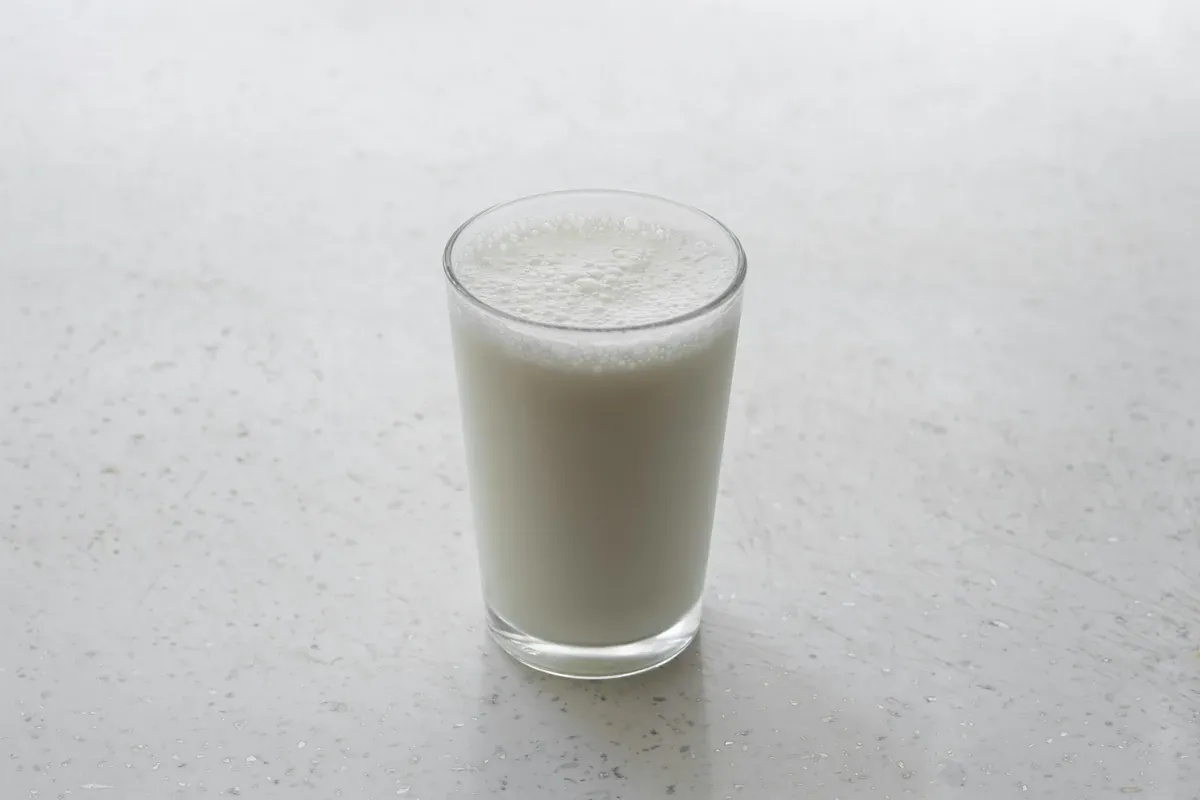
Open a fridge in most South African homes and, sooner or later, you'll find a tub of it: thick, tangy, faintly lumpy milk that's been left to sour on purpose. Amasi has been part of daily eating here for centuries, long before anyone talked about probiotics or gut health, and it's now getting fresh attention from food scientists who want to know exactly what's going on inside that tub. Here's what the research actually says, the good and the less good.
What exactly is amasi?
Amasi (also spelled maas, and known as maswi or sethemi in some regions) is milk that has been fermented by lactic acid bacteria until it thickens, sours and separates slightly into curd and whey.[1] It sits somewhere between yoghurt and buttermilk, sharper than the former, thicker than the latter, and it's eaten across South Africa, Zimbabwe, Lesotho and much of the wider region under various names.[2]
A food with deep roots
Amasi isn't a recent health trend. Among the Zulu, Xhosa, Sotho and Ndebele peoples, cattle have always meant far more than meat and milk. The old Zulu saying "umnumzane ubonakala ngesibaya sakhe", a man's standing is seen by the size of his kraal, captures how directly cattle ownership was tied to status, and cattle were also exchanged as lobolo, or bride wealth, in marriage negotiations.[3] Amasi is the form in which that wealth got eaten, day to day.
Traditionally it was made in a calabash gourd called an igula, left to ferment on its own with whatever bacteria were already living in the vessel.[4] Among the Zulu, amasi has long been associated with strength and health, and the Xhosa serve it as part of a dish called utsiki to welcome a new bride into the family.[2] It's also the classic partner to uphutu, a crumbly maize meal porridge eaten cold with amasi, or hot with beans or cabbage.[4] None of that is marketing. It's just what amasi has meant in South African kitchens for a very long time.
How it's made, then and now
The traditional method is spontaneous fermentation: raw milk left in a calabash or hide sack for one to five days, with whatever bacteria happen to be present doing the work.[2] That's part of what gives homemade amasi its variable, sometimes unpredictable character from one household to the next.
Commercial amasi works differently, and more predictably. Full-cream milk is pasteurised first, cooled to around 30°C, then inoculated with a defined starter culture, typically Lactococcus lactis, and left to ferment for roughly 16 to 24 hours before packaging.[2] That pasteurisation step matters a lot for safety, and it's the main thing separating a tub of amasi off a supermarket shelf from the homemade version, which is worth keeping in mind further down.
What's actually in a glass of amasi
Per 100g, amasi works out to roughly 64 calories, about 3.3g of protein and 3.7g of fat, with calcium and vitamin B12 each covering a meaningful chunk of an adult's daily needs.[2] A single glass covers roughly a third of an adult's daily calcium requirement and close to half of daily vitamin B12, while contributing relatively little sodium alongside a decent amount of potassium.[5]
Fermentation changes the milk in ways that go beyond flavour. A 2022 University of Johannesburg study found that fermentation increases the levels of several amino acids, including glutamic acid and leucine, and meaningfully boosts the milk's antioxidant activity and phenolic content compared with raw milk.[1] The same fermenting bacteria also break down some of the milk's lactose, which is why amasi is often described as easier to digest than fresh milk for people who are mildly lactose intolerant, though it isn't lactose free and won't suit everyone with a genuine intolerance.[5]
The health benefits, according to the research
The bacteria doing the fermenting are the real story here. A DNA-based study of amasi found Lactococcus lactis to be the dominant organism by a wide margin, with various Lactobacillus, Leuconostoc and Enterococcus species also present in smaller numbers, forming a genuinely diverse bacterial community.[6] That fermentation is also what drives the antioxidant boost mentioned above, and a 2021 review of the amasi literature credits these bacteria with amasi's nutritional value and possible wider health benefits, while cautioning that research on amasi specifically still lags well behind better studied ferments like yoghurt or kefir.[7]
One of the more concrete findings comes from the South African Food Allergy cohort study, which tracked toddlers in both urban and rural communities. It found that regular consumption of commercially fermented milk products was associated with lower rates of asthma and atopic dermatitis (eczema) in urban children, though the same protective link didn't hold in rural children, who seemed to get similar protection from early exposure to farm animals instead.[8] It's an association rather than proof that amasi itself prevents allergies, but it's a genuine, peer reviewed South African finding rather than a marketing claim.
Beyond that, amasi's mineral content does real, unglamorous work: the calcium supports bone health, and the potassium to sodium balance is favourable for heart health compared with many other everyday foods.[5] It's also a genuinely good source of complete protein and vitamin B12, which matters in a country where B12 and calcium intakes aren't always where they should be.
The risks worth knowing about
Here's the part that gets left out of most amasi write-ups. The risk almost entirely comes down to one variable: whether the milk was pasteurised before it was fermented.
Commercial amasi, the tubs on supermarket shelves, is made from pasteurised milk, so the heat treatment kills off harmful bacteria before fermentation even begins. That's a genuinely different, safer product from homemade amasi fermented from raw milk.
Traditional, homemade amasi is usually made from raw, unpasteurised milk, fermented spontaneously using whatever bacteria are present in the milk, the container and the environment. That's exactly the kind of uncontrolled process food safety researchers pay close attention to. A 2022 study of Mabisi, a closely related traditionally fermented raw milk product from Zambia, found that strains of Staphylococcus aureus, Salmonella and Listeria monocytogenes could survive fermentation and were still present in the finished product after 48 or 72 hours, albeit below the legally set thresholds of acceptability.[9] South Africa's own Dairy Standard Agency is blunt about the broader raw milk risk, warning that raw milk should not be consumed unpasteurised, and that unpasteurised dairy poses an even greater risk to young children, the elderly and anyone with a compromised immune system, including people living with HIV or TB.[10] The agency also points out that testing hasn't found much difference in bacterial load between raw milk from regulated and unregulated suppliers, so "it came from a small local supplier" isn't a safety guarantee on its own.[10]
None of this means homemade amasi is automatically dangerous. Millions of people have made and eaten it safely for generations, and the Zambian Mabisi study found that traditional processing methods can and often do produce a microbiologically safe result. But it does mean the traditional method carries a real, documented food safety risk that pasteurised commercial amasi doesn't, and that risk is highest for exactly the groups least able to shake off a bout of food poisoning: babies, pregnant women, older people and anyone immunocompromised.
Store-bought or homemade?
If you're buying amasi off a supermarket shelf, you're getting the pasteurised, lower-risk version, and there's no real reason to avoid it on safety grounds. Check the label if you want to confirm the milk was pasteurised before fermentation, keep it refrigerated, and treat the sell-by date the same way you would for any dairy product.
If you want to make it the traditional way, at home, from raw milk, the food safety advice is the same as for any raw dairy product: source the milk from a supplier you trust, keep everything scrupulously clean, and think twice about serving it to babies, pregnant women, elderly relatives or anyone with a weakened immune system. That's not a judgement on the tradition, it's the same caution health authorities apply to any unpasteurised dairy, anywhere in the world.
Either way, amasi earns its place in a South African diet honestly: real calcium, real protein, live cultures, and generations of practical wisdom about how to keep milk edible without a fridge. Just know which version is in your glass.
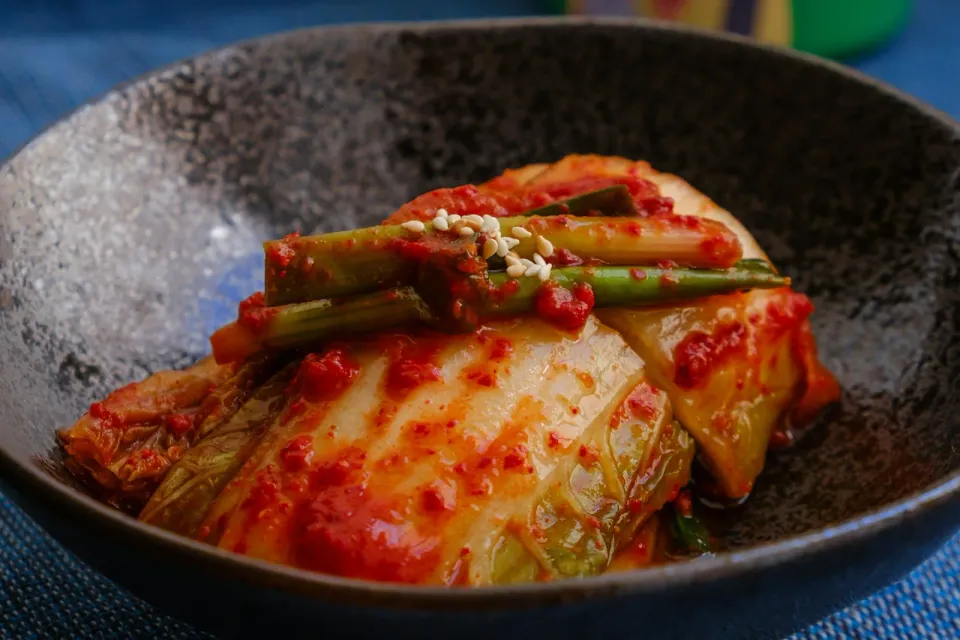
Amasi isn't the only fermented food getting fresh scientific attention. See our companion piece on kimchi's health benefits and how to make it in South Africa for how a very different ferment stacks up.
Frequently asked questions
Is amasi the same as kefir?
No. Kefir is fermented with kefir grains, a mixed colony of bacteria and yeast that gives it carbonation, a faint alcoholic edge and a wider range of microbial strains.[7] Amasi ferments with lactic acid bacteria dominated by Lactococcus lactis, with no yeast involved, so it thickens into a curd rather than staying pourable and fizzy like kefir.[6] Research on amasi specifically still lags behind better studied ferments like yoghurt and kefir, so less is documented about how its narrower bacterial mix compares in practice.[7]
Does amasi have probiotics?
Yes. A DNA-based study of amasi found Lactococcus lactis to be the dominant organism, with various Lactobacillus, Leuconostoc and Enterococcus species also present, forming a genuinely diverse bacterial community.[6] Fermentation is also what drives amasi's antioxidant boost and its higher levels of certain amino acids compared with raw milk.[1]
Is amasi safe if you're lactose intolerant?
Amasi is often easier to digest than fresh milk because the fermenting bacteria break down some of the lactose, but it isn't lactose free.[5] People with a mild intolerance often tolerate it well, but it won't suit everyone with a genuine lactose intolerance.
Can pregnant women or babies drink amasi?
Commercial, pasteurised amasi carries no extra risk beyond ordinary dairy. Homemade amasi made from raw milk is different, food safety researchers have found that harmful bacteria can survive spontaneous fermentation, and South Africa's Dairy Standard Agency specifically warns that unpasteurised dairy poses a greater risk to babies, pregnant women, the elderly and anyone immunocompromised.[9][10]
Can you make amasi at home?
Yes. The traditional way is to leave raw milk in a container for one to five days and let whatever bacteria are present do the work, though the result is unpredictable from one batch to the next.[2] A more consistent home method uses pasteurised milk with a spoonful of live starter, either commercial amasi or a mesophilic yoghurt culture, left at room temperature until it thickens, usually within a day or two.
Sources
- Maleke, M.S. & Adebo, O.A. (2022). Nutritional Composition and Health-Promoting Properties of Amasi: A South African Fermented Milk Product. Fermentation, 8(10), 493.
- Amasi, Wikipedia.
- South African Tourism. Zulu culture and cattle symbolism.
- South African Tourism. Zulu cuisine: the dishes and traditions.
- Amasi / Maas, Rediscover Dairy.
- Osvik, R.D. et al. (2013). Bacterial diversity of aMasi, a South African fermented milk product, determined by clone library and denaturing gradient gel electrophoresis analysis. African Journal of Microbiology Research, 7, 4146-4158.
- Maleke, M., Adefisoye, M., Doorsamy, W. & Adebo, O.A. (2021). Processing, nutritional composition and microbiology of amasi: A Southern African fermented milk product. Scientific African, 12, e00795.
- Levin, M.E. et al. (2020). Environmental factors associated with allergy in urban and rural children from the South African Food Allergy (SAFFA) cohort. Journal of Allergy and Clinical Immunology.
- Schoustra, S. et al. (2022). Microbiological safety of traditionally processed fermented foods based on raw milk, the case of Mabisi from Zambia. LWT, 171, 113997.
- Dairy Standard Agency. The raw milk risk: Ask the right questions.
What do you think?
Join the conversation on our South African community forum. Share your perspective, ask a question, or just say hello.