South Africa's Water Infrastructure Crisis Explained
SA's dams are full, but ageing pipes, failing sewage works and 47% non-revenue water mean the taps still fail. Here's the full picture.
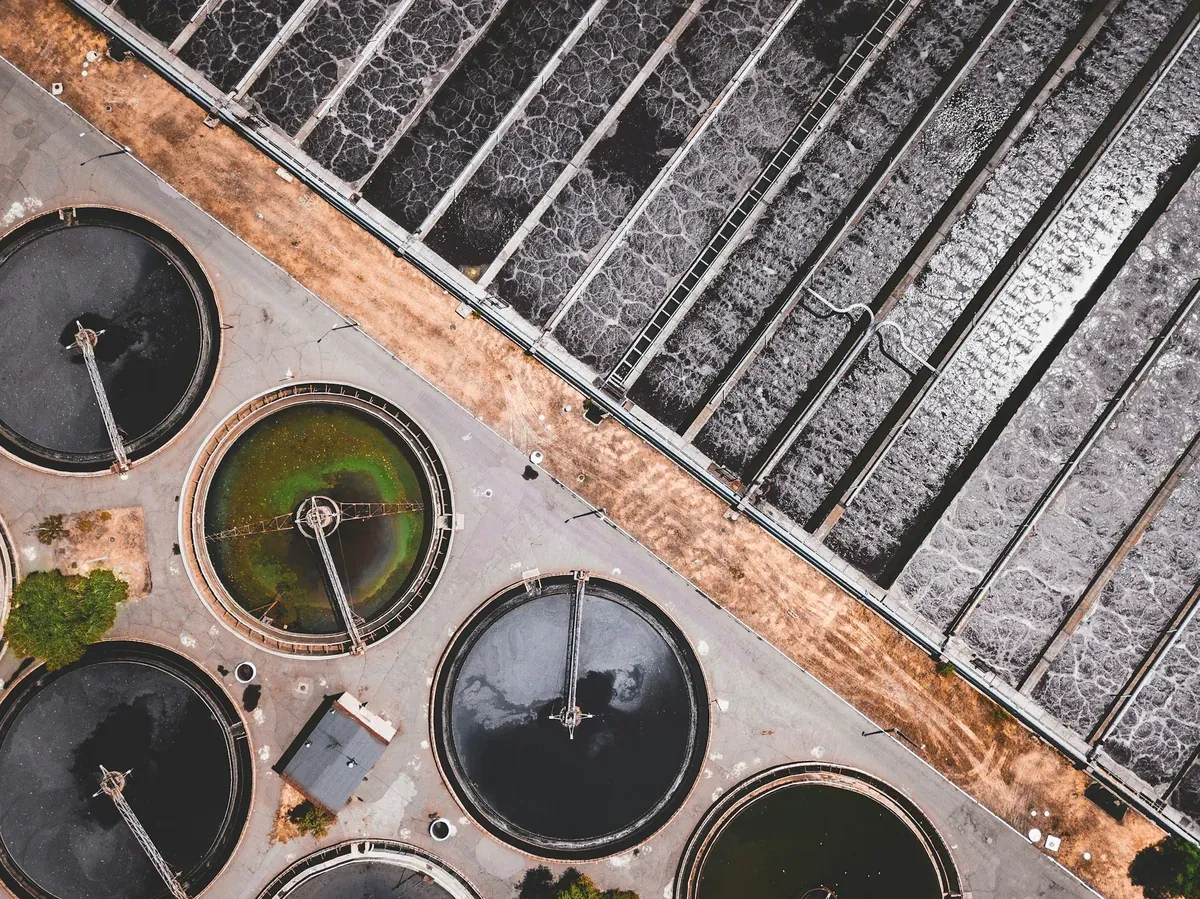
Turn on a tap in large parts of South Africa in 2026 and there's a real chance nothing comes out, or what does isn't safe to drink. That's not scarcity in the way most people picture a drought, it's decay. The country's dams are, for the most part, comfortably full. The problem is the taps, pump stations and sewage works that are supposed to move that water to your house and take it away again once you're done with it.
Government's own numbers, released through the 2026 Blue Drop, 2025 Green Drop and 2025 No Drop reports and now folded into a new National Water Action Plan, describe a system in genuine trouble. Here's what's actually going on, and what's being done about it.
Nearly half of all treated water never reaches a paying customer
The single number that best captures the crisis is non-revenue water, treated, paid-for water that leaks out of pipes, gets stolen through illegal connections, or simply never gets billed. Nationally it sits at 47.3%, which means South Africa loses more than 2.1 billion kilolitres of water a year, worth an estimated R26 billion, before it ever reaches a household or business.
Some municipalities are far worse than the national average. eThekwini, which includes Durban, recorded a non-revenue water rate of 65% in June 2026 while working through a backlog of around 12,000 reported leaks. Across KwaZulu-Natal more than 92% of water service authorities fail to meet the 30% loss threshold considered acceptable, and the province is losing close to R4 billion a year to it. Gauteng's losses are large in absolute terms too, an estimated 431 billion litres a year, nearly as much as the Western Cape's entire annual water supply.
Most of that loss is simple physical decay: about 32% of all water supplied nationally leaks away through ageing pipes, worn reservoirs and failing valves before anyone ever uses it, roughly two-thirds of the total non-revenue water figure, with theft and unbilled connections making up most of the rest.
Wastewater treatment is deteriorating faster than it's being fixed
The Green Drop report, which assesses the wastewater treatment plants that clean sewage before it's returned to rivers, paints an even bleaker picture. Based on 2023/24 financial year data, of 848 plants assessed nationally, 396, nearly half, were rated in a critical state, up from 334 the previous cycle. The share rated excellent or good has fallen from 14% to just 8%, and the number of plants earning a Green Drop certification has dropped from 22 to 14.
Five of South Africa's eight metros, including eThekwini, Johannesburg, Tshwane, Buffalo City and Nelson Mandela Bay, now have critical wastewater systems on their books. The Free State is the worst-affected province, with 98% of its systems rated poor or critical. When a treatment plant fails, the practical result is untreated or partially treated sewage flowing into rivers and dams, the same water sources that downstream towns and farms rely on.
Drinking water quality, tracked by the Blue Drop report, has held up somewhat better, low-risk systems edged up from 60.2% to 61.9% of the 1,006 systems assessed, and systems rated critical risk fell from 9.9% to 7.9%. But the regional gap is stark. The Northern Cape now has 87% of its drinking water systems rated poor or critical, up sharply from 48% back in 2014, and the Free State has gone from 31% to 59% over the same period. Western Cape and Gauteng remain the most reliable performers on both fronts.
Why Johannesburg runs out of water when the dams are full
Johannesburg has spent much of 2026 illustrating what this decay looks like in a major city. Large parts of the metro have gone days without running water at a time, not because of drought but because of ageing pipes, pump failures and electricity outages at Rand Water's own installations. Rand Water, which supplies bulk water to Gauteng, ran major planned maintenance on its Palmiet and Zuikerbosch systems between late May and mid-July 2026 specifically to shore up electrical and pumping infrastructure that had become unreliable, affecting Midrand, Randburg, Roodepoort, Sandton, Soweto and other areas for extended stretches.
Gauteng has committed R760 million to stabilising supply in the province, and it's telling that officials describe the underlying problem as infrastructure failure rather than water scarcity. The dams feeding Johannesburg are, if anything, unusually full. The Vaal Dam has been sitting above 100% of full supply capacity through much of 2026, and the Integrated Vaal River System, which supplies Gauteng and its economic hubs, was reported at 99.6% in July. The water is there. Getting it to a tap reliably is the part that's failing.
How mining and sewage pollution affect South Africa's rivers
Beyond leaks and treatment failures, South Africa's rivers carry a legacy pollution burden from mining. Acid mine drainage, acidic, metal-laden water that seeps out of old gold and coal workings, continues to degrade catchments including the Vaal and Olifants rivers, with the Olifants alone receiving an estimated 44 million litres of contaminated mine water a day. Combined with the sewage overflows coming from failing Green Drop plants, it means some of the same rivers municipalities draw drinking water from are also receiving the pollution nobody has fully cleaned up.
Where South Africa's extra water is actually going to come from
One piece of good long-term news sits outside the municipal system entirely. Phase 2 of the Lesotho Highlands Water Project, which already supplies a large share of Gauteng's water via the Vaal system, is under construction and expected to start transferring additional water from 2028/29. Once complete it will lift the scheme's annual transfer from Phase 1's 780 million cubic metres to more than 1,270 million cubic metres a year, easing how often drought restrictions have to be imposed on the Vaal system. It won't fix a leaking pipe in Soweto or a broken pump station in Durban, but it does mean the raw water constraint many people assume is the core problem isn't really the one that needs solving first.
For households and farms that have stopped relying on municipal supply altogether, the maths of going independent is its own exercise. Our Farm Dam Volume & Water Security Calculator works out how long stored water actually lasts against real demand, our Farm Dam Yield & Reliability Calculator checks whether that dam will actually refill reliably from ten years of real rainfall rather than just how big it is, and the Borehole Pump Electricity Calculator shows what pumping your own water costs to run each month.
The National Water Action Plan: government's response
On 23 July 2026, President Cyril Ramaphosa released the National Water Action Plan, the output of WATERCOM, the National Water Crisis Committee he set up after the 2026 State of the Nation Address specifically because water supply interruptions had become too severe and too widespread to treat as isolated municipal failures. The plan brings together national departments, water boards and the South African Local Government Association around three main levers: pulling in more infrastructure investment, including from the private sector, tightening legal and regulatory accountability for municipal service delivery, and going after corruption and criminality in the water sector directly.
The reform most likely to matter in practice is ring-fencing water revenue. Right now, money that households and businesses pay for water often gets absorbed into a municipality's general budget rather than being reinvested into the pipes and treatment works that generated it, which is a large part of why maintenance keeps losing out. Government is already spending around R24 billion a year on roughly 800 municipal water and sanitation projects, with large builds under way in KwaZulu-Natal, Mpumalanga and Limpopo, and Ramaphosa has explicitly framed the plan as applying the same approach used to turn around the electricity crisis, saying government is "applying the same approach to the water crisis that has been unfolding in many parts of our country," in effect trying to do for taps what the Eskom turnaround did for lights.
Whether it works will show up in the same three reports over the next few years. If ring-fenced revenue and private investment actually translate into fewer critical wastewater plants and a falling non-revenue water number, it will be visible in the next Blue Drop and Green Drop cycle. If not, the gap between South Africa's comfortably full dams and what actually reaches a tap will keep widening.
Frequently asked questions
Is tap water safe to drink in South Africa?
It depends heavily on where you are. The latest Blue Drop report found 61.9% of the 1,006 drinking water systems assessed were low risk, and the share rated critical risk fell to 7.9%. Western Cape and Gauteng systems perform strongest. The picture is much worse in parts of the Northern Cape, where 87% of systems are now rated poor or critical, and the Free State, where 59% are. In a well-run metro the tap water is generally fine, in a struggling small municipality it may not be.
Why does Johannesburg run out of water when the dams are full?
Because the shortage is a delivery failure, not a supply shortage. The Vaal Dam has been above 100% of full supply capacity for much of 2026 and the Integrated Vaal River System was reported at 99.6% in July. What fails is everything between the dam and the tap: ageing pipes, pump station breakdowns and electricity outages at Rand Water installations. Gauteng has committed R760 million to stabilising supply, and officials themselves describe the problem as infrastructure failure rather than scarcity.
What is non-revenue water?
Non-revenue water is treated, paid-for water that never earns a municipality anything, because it leaks out of pipes, is taken through illegal connections, or is simply never billed. South Africa's national rate is 47.3%, meaning more than 2.1 billion kilolitres a year, worth an estimated R26 billion, is lost before it reaches a household or business. The threshold generally considered acceptable is 30%.
How much of South Africa's water is lost to leaks?
About 32% of all water supplied nationally leaks away through ageing pipes, worn reservoirs and failing valves before anyone uses it. That is roughly two-thirds of the total non-revenue water figure, with theft and unbilled connections making up most of the remainder. It points to maintenance backlogs rather than any single dramatic failure.
Which provinces have the worst water systems?
The Free State is worst on wastewater, with 98% of its treatment systems rated poor or critical. The Northern Cape is worst on drinking water, at 87% poor or critical, up sharply from 48% in 2014. On the other end, Western Cape and Gauteng consistently record the highest share of well-performing systems on both the Blue Drop and Green Drop assessments.
Is South Africa running out of water?
Not in the immediate raw-supply sense. Dam levels across the Integrated Vaal River System have been strong through 2026, and Phase 2 of the Lesotho Highlands Water Project will lift annual transfers to more than 1,270 million cubic metres once it starts delivering from 2028/29. See our Season Rainfall Tracker for how this season's actual rainfall compares to normal, town by town. The pressing problem is that the pipes, pumps and treatment works needed to get that water to people, and to clean it afterwards, are failing faster than they are being repaired.
What is the National Water Action Plan?
It is the plan President Cyril Ramaphosa released on 23 July 2026 through WATERCOM, the National Water Crisis Committee set up after the 2026 State of the Nation Address. It works on three fronts: attracting more infrastructure investment including private capital, tightening legal and regulatory accountability for municipal service delivery, and tackling corruption in the water sector. Its most practical reform is ring-fencing water revenue so that money paid for water goes back into maintaining water infrastructure instead of a municipality's general budget.
That comfortable position could tighten in the seasons ahead. The El Niño weather pattern now strengthening over the Pacific raises the odds of a hotter, drier summer over the interior heading into the 2026/27 season, which draws down even full dams faster than usual.
Water is ultimately a municipal service, and how well your own municipality runs it is one of the more concrete things to weigh at the ballot box. Our Local Vote Helper sets out how the metros compare on service delivery ahead of the 2026 municipal elections. For more current statistics on the country, see our South Africa key facts page, and you can find every free tool on our tools and calculators page.
Figures cited are drawn from the Department of Water and Sanitation's 2026 Blue Drop Progress Report, 2025 National Green Drop Report (assessing the 2023/24 financial year) and 2025 No Drop Progress Report, the July 2026 National Water Action Plan, and public reporting current as of July 2026. Last updated July 2026.
What do you think?
Join the conversation on our South African community forum. Share your perspective, ask a question, or just say hello.