Foot-and-Mouth Disease in South Africa: Where the Outbreak Stands Now
Is your meat still safe to eat? Foot-and-mouth disease has now reached all nine SA provinces. Here's what's happening with outbreaks, vaccines and trade bans.
Last updated: 13 August 2026
Foot-and-mouth disease has been part of South African farming news for well over a year now, but the scale of the current outbreak still catches people off guard. As of the Department of Agriculture's most recent national technical report, dated 30 June 2026, there were 2,403 open outbreaks across all nine provinces, with a further 41 already resolved and closed. In the Free State alone, the province hardest hit, the provincial veterinary services put their own confirmed case count at 739 by 4 August, with 247 properties still under active quarantine. The disease has already reshaped how South Africa vaccinates livestock, trades red meat and even runs its Department of Agriculture.
Here is where things actually stand, and why it has taken this long to bring under control.
What foot-and-mouth disease actually does
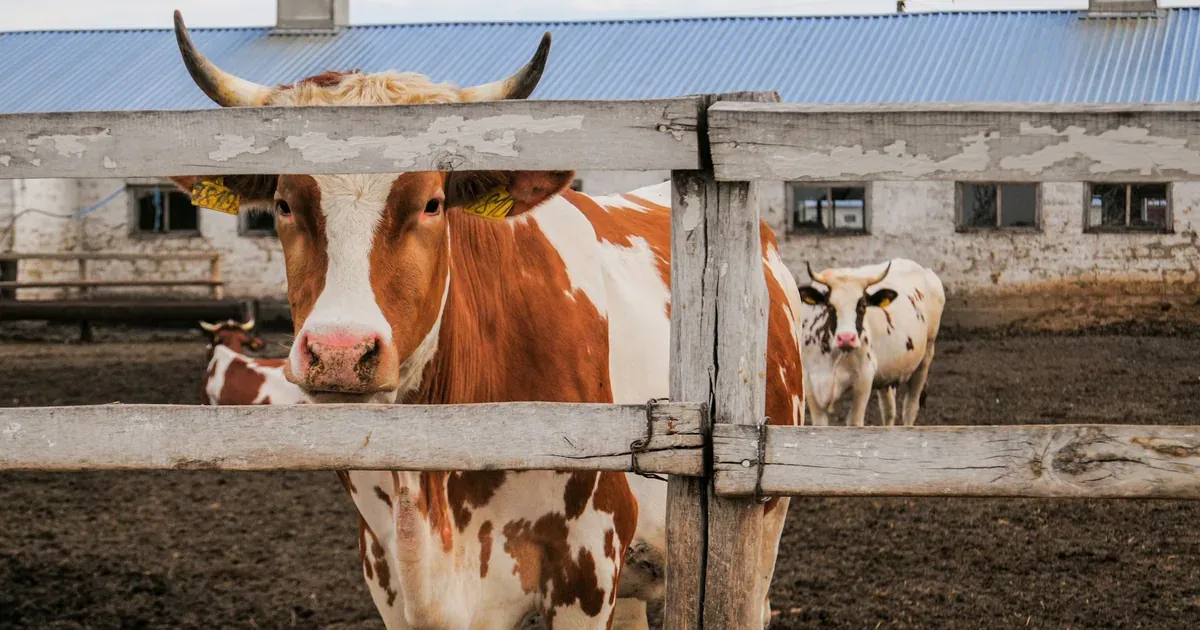
FMD is a highly contagious viral disease that affects cloven-hoofed animals: cattle, sheep, goats, pigs and various wild species such as buffalo and kudu. It causes fever, blisters on the mouth and feet, and weight loss, and while it is rarely fatal in adult animals, it is brutal for farmers because of how easily it spreads and how quickly trading partners react to it. The damage from an outbreak is almost entirely economic, hitting export markets, auction prices and the movement of livestock between provinces.
Is it safe to eat meat and dairy right now?
Yes. FMD is a livestock disease, not a food safety issue, and the World Health Organization has said outright that FMD does not pose a public health threat the way something like avian flu does. Human infection is extremely rare and, historically, has only really occurred in people working in very close contact with infected animals. Meat from visibly sick animals is not allowed into the formal food chain in the first place, since infected properties are placed under quarantine and controlled, and the virus itself does not survive normal cooking temperatures. Pasteurised milk is safe for the same reason, the heat treatment kills the virus. The advice for shoppers is the same advice that always applies: buy from a reputable butchery or retailer and let inspection do its job. Nothing about the current outbreak changes that.
How the outbreak grew this large
South Africa lost its internationally recognised FMD-free status in January 2019, and the country has dealt with periodic outbreak events ever since. The event behind most of today's caseload is a SAT2 strain that first appeared in KwaZulu-Natal in May 2021 and was never fully brought under control, resurfacing in the Eastern Cape in 2024 before spreading into Mpumalanga and Gauteng in April 2025, then North West in June 2025 and the Free State in July 2025. On top of that, a separate SAT1 strain identified in Gauteng in October 2025 turned out to be the real driver of the truly national spread, later isolated from outbreaks in the Western Cape, Free State, North West, Mpumalanga, KwaZulu-Natal, Eastern Cape and Northern Cape. Having two serotypes circulating in parallel, on top of a separate SAT3 event in the Eastern Cape that is now being closed out, has made a single, simple response far harder to pull off.
By May 2025 the disease had reached commercial herds outside KwaZulu-Natal, which was serious enough that China suspended all South African beef imports within days, a market that had been worth close to R3 billion a year. Slaughter numbers dropped, beef exports fell by around 26 percent over the second half of 2025, and the pressure on government to act became impossible to ignore. On 13 February 2026, the Head of the National Disaster Management Centre, Dr Elias Sithole, formally classified FMD as a national disaster under the Disaster Management Act, citing outbreaks across the Eastern Cape, Free State, Gauteng, KwaZulu-Natal, Limpopo, Mpumalanga, North West and Western Cape. That declaration gave CoGTA a formal coordinating role alongside the agriculture department and made it easier to mobilise funding and resources across provinces.
Which provinces have the most outbreaks right now
Going by the department's own province-by-province WOAH reporting as of 30 June 2026, the Free State carries by far the heaviest load with 636 open outbreaks, followed by North West (407), the Eastern Cape (365), KwaZulu-Natal (326), Gauteng (280), Mpumalanga (254) and Limpopo (89), with the Western Cape (25) and Northern Cape (22) affected on a much smaller scale. Since then the Free State's own count has kept climbing, reaching 739 confirmed cases by early August, concentrated around Kroonstad, Heilbron, Frankfort, Bethlehem and Sasolburg. It is a genuinely mixed picture even there: close to two-thirds of those cases have already been resolved once affected farms met quarantine and disease-control requirements, so new infections are still appearing weekly, but so are recoveries.
A vaccine push that changed direction halfway through
The vaccination campaign has arguably been the biggest story within the story. South Africa restarted local FMD vaccine production at the Agricultural Research Council's Onderstepoort Veterinary Institute for the first time in 21 years, initially aiming for 20,000 doses a week and building toward 200,000 doses weekly. That local supply was topped up with millions of imported doses, and the campaign has scaled up sharply over the course of the year. By early August the Free State's provincial total alone had reached 1.44 million cattle vaccinated, and government's stated goal, reaffirmed in the department's June technical report, remains to reach at least 80 percent of the national herd.
It still was not fast enough for a lot of farmers, who argued that leaving vaccine imports and distribution solely in government's hands, through Onderstepoort Biological Products, was slowing the response. That tension came to a head in a court case brought by Sakeliga, the South African Agri Initiative and Free State Agriculture, among others. On 9 July 2026 the dispute ended in a settlement rather than a ruling, and it turned out to be a bigger deal than most court settlements: the department agreed to give up its sole right to import and distribute FMD vaccines, opening the door for private vets, agribusinesses and accredited importers to bring vaccines in directly and vaccinate voluntarily, subject to biosecurity and traceability rules.
That settlement landed just as the FMD response was changing hands politically. A DA cabinet reshuffle took effect on 1 July 2026, moving John Steenhuisen out of the agriculture portfolio and into a deputy minister role at trade, industry and competition, with Willie Aucamp, previously minister of forestry, fisheries and the environment, taking over agriculture. Aucamp has leaned hard into the private-sector opening, launching an online self-vaccination authorisation system so farmers can apply to vaccinate their own herds, and reporting in late July that 15 million vaccine doses had been imported in total, with a further 4 million on the way.
The trade damage is the part that lingers
Even as the outbreak stabilises on the ground, the trade consequences are proving harder to reverse. China's ban, imposed in May 2025, is still in place, and it was South Africa's single largest red meat export market before the outbreak. Neighbouring Mozambique, Namibia, Zimbabwe and Eswatini have also restricted imports of South African livestock and red meat products since the outbreak began. It sits on top of a much older restriction: the European Union barred South African red meat and game exports from cloven-hoofed animals back in 2011, a restriction the local game meat industry says it has never fully recovered from. Regaining FMD-free status with the World Organisation for Animal Health, and then convincing individual trading partners to lift their own bans, is a slow process even once outbreaks stop, so the export hit is likely to outlast the disease itself by a wide margin.
A new rulebook for the next outbreak
One lasting change to come out of this crisis is regulatory rather than veterinary. Just before leaving the portfolio, Steenhuisen approved a new, single national FMD control framework, replacing the old 2019 contingency plan and its various amendments. It was formally gazetted on 8 July 2026, a week after the cabinet reshuffle, under the Animal Diseases Act, so it is Aucamp's department that is actually implementing it. The idea is to set out, in one document, exactly how an outbreak should be managed from first detection through to a farm being cleared and restocked, something government has been criticised for not having in place clearly enough this time round.
What this means for ordinary South Africans
For consumers, the practical impact has stayed limited. There is no meat shortage, prices have not spiked dramatically, and the livestock value chain, while under strain, has kept functioning. The pain is concentrated among farmers in the worst-hit municipalities, who face movement restrictions, culling of infected animals and the cost of vaccination, and among exporters who have lost markets that took years to build. At KragDag 2026 in early August, the disease was, tellingly, discussed less as an emergency to survive than as a structural problem the sector now has to learn to manage long term, through better traceability, faster private-sector vaccine access and the new national framework.
The outbreak is not over. But for the first time since the case numbers started climbing in 2025, there are more tools in farmers' hands to fight it, and a clearer official picture of how it actually spread.
What do you think?
Join the conversation on our South African community forum. Share your perspective, ask a question, or just say hello.