Kaapse Klopse: A Vibrant Tradition in Cape Town
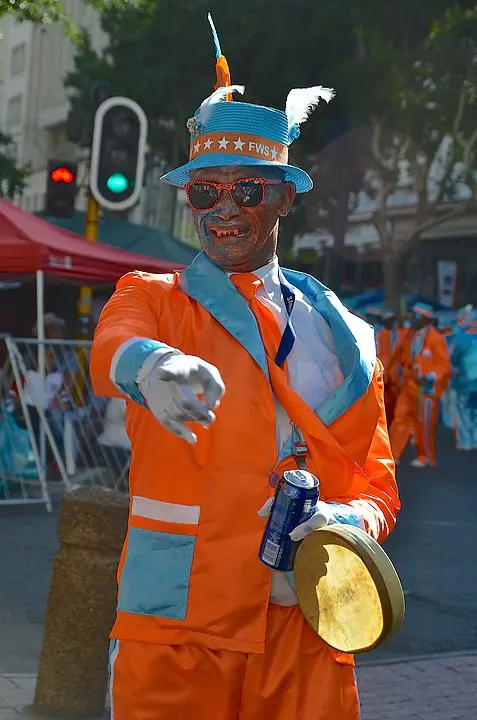
Kaapse Klopse, formerly known as the Coon Carnival and officially called the Cape Town Minstrel Carnival, is a vibrant annual celebration held on 2 January each year, known as Tweede Nuwe Jaar (Second New Year). This festival, with its roots in the early colonial period, is one of the oldest continuous cultural traditions in South Africa. It originated when enslaved people were given a single day off on 2 January and transformed it into a grand celebration of music, dance, and community. Today, the Kaapse Klopse remains a powerful symbol of resilience and cultural pride for Cape Town's coloured communities.
Kaapse Klopse: A Historical Perspective
The history of the Kaapse Klopse dates back to the early colonial period when slaves were given a day off on 2 January, known as Tweede Nuwe Jaar. They turned this holiday into a day of celebration, filled with music, dance, feasting, and visiting friends. This tradition continued even after the emancipation of slaves in 1834, evolving to include street parades and bands. By the late 19th century, these singing groups and bands began affiliating with specific sports clubs, and they would compete annually in songs, dances, parades, and costume displays throughout the streets and suburbs of Cape Town.
The modern Cape Minstrel tradition was influenced by visits from American minstrel troupes, including Christy's Minstrels in 1862 and Orpheus McAdoo's Virginia Jubilee Singers in 1890. These performances introduced the blackface tradition and influenced the distinctive style of the Cape Town carnival.
Tweede Nuwe Jaar: Why 2 January?
Unlike most New Year celebrations that peak on 1 January, the Kaapse Klopse takes place on 2 January. This dates back to the Dutch colonial period when slaves were not given New Year's Day off, but instead 2 January. The tradition of celebrating on this date persisted long after emancipation, and today Tweede Nuwe Jaar remains the official day of the Cape Town Minstrel Carnival. In some years the main parade may shift to the nearest weekend, but the festival always centres around this date.
What to Expect at the Carnival
Up to 13,000 minstrels take to the streets of Cape Town in dazzling satin suits, feathered hats, and painted faces. They carry colourful parasols and play an array of instruments, led by the distinctive beat of the ghoema drum. Each troupe, or klopse, is self-organised and competes in categories for song, dance, costume, and musicianship. The parade traditionally makes its way from the Bo-Kaap (Malay Quarter) through the city centre to Green Point or Athlone Stadium, where the main competitions take place.
The Kaapse Klopse Today: Local and Foreign Influences
Today, the Kaapse Klopse is a blend of local and foreign influences. Over the decades, the festival has incorporated elements ranging from African American religious hymns to classical European musical forms, and from Mexican folk dances to West Indian stilt walkers. The ghoema beat, the Malay choir tradition, and Afrikaans folk songs all contribute to a uniquely Capetonian sound that cannot be found anywhere else in the world.
A Platform for Social Bonds and Community
For the diverse communities in Cape Town, the Kaapse Klopse serves as a vital platform for strengthening social bonds and building community cohesion. Despite the historical oppression and forced removals under apartheid, particularly the destruction of District Six, the festival has allowed these communities to express their creativity and affirm their humanity. Through the annual Kaapse Klopse, performers creatively adapt the latest musical forms to craft a new identity, affirming their autonomy and modernity.
Challenges and Controversy
The festival has faced significant challenges over its history. Under apartheid, the Group Areas Act of 1966 led to the forced removal of approximately 60,000 residents from District Six to the Cape Flats, disrupting the community networks that sustained the minstrel troupes. In 1967, the carnival was banned from Green Point Stadium, and by 1977 all minstrel marches were forbidden in Cape Town. The event survived by moving between various stadiums until it returned to its original route in 1989.
Today, there is ongoing debate around the use of blackface by some performers, a tradition inherited from 19th-century American minstrel shows. Many participants and organisers defend the practice as cultural tradition, while others view it as outdated and racially insensitive. The festival also continues to work to move past its former name, the "Coon Carnival," which is now widely rejected as a racial slur.
A Symbol of Resilience and Cultural Pride
The Kaapse Klopse, with its celebration of racial and cultural diversity, subtly rejects the myths of white racial superiority and racial purity that were prevalent in South African society. The festival's persistence through slavery, apartheid, and forced removals is a testament to the resilience of Cape Town's coloured communities and their enduring claim to the city.
Whether you are planning to visit for Tweede Nuwe Jaar 2027 or simply want to understand this extraordinary tradition, the Kaapse Klopse remains one of the most vibrant expressions of Cape Town's cultural heritage. The Minstrel Carnival Cape Town is a testament to the city's rich history and diverse cultural influences, a celebration that has survived, adapted, and thrived for over a century.
What do you think?
Join the conversation on our South African community forum. Share your perspective, ask a question, or just say hello.