
Raised Bed Soil Calculator (South Africa)
Enter your bed's length, width and depth to get the soil volume, the topsoil and compost split, bags needed, and whether bagged or bulk works out cheaper.
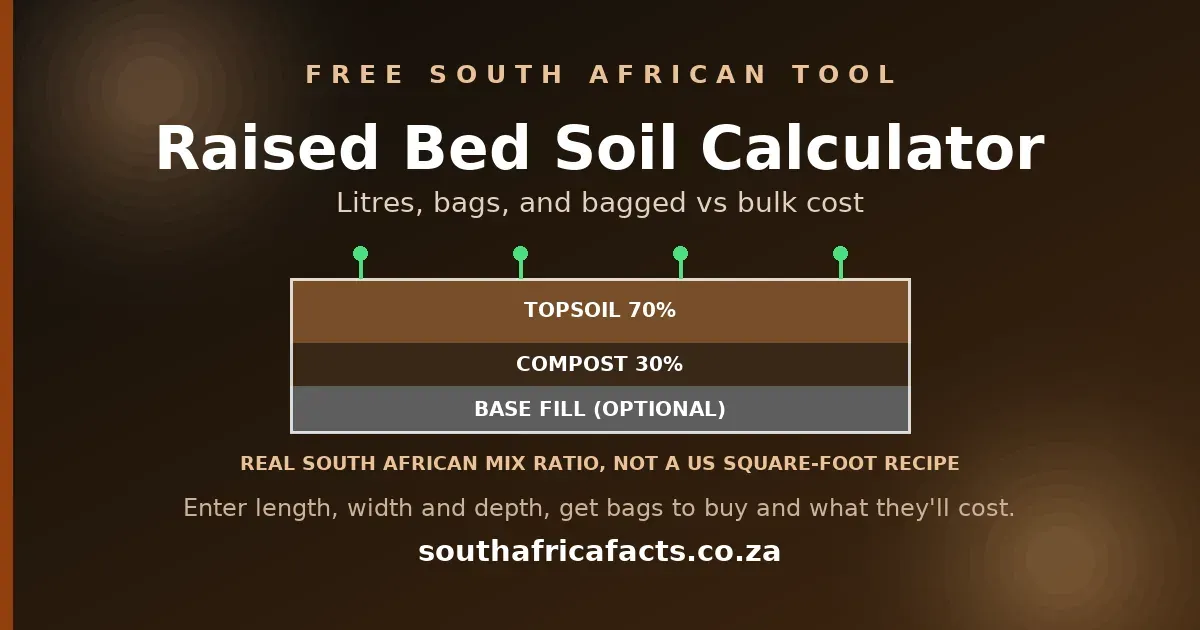
Enter your raised bed's dimensions and this works out exactly how much soil you need, split into topsoil and compost, in litres, cubic metres and bags. It then compares buying it bagged from the garden centre against ordering it in bulk, the two are priced very differently in South Africa, and bulk usually wins once you're filling more than a bed or two.
Pick a popular size to start, or type your own below. The standard and small sizes match common sleeper-built beds, the accessible size matches a South African metal raised-bed manufacturer's own waist-height range.
Building more than one bed the same size? Set the count here rather than adding them up by hand.
Filling a deep bed? Save money with a base-fill layer
A South African raised-bed supplier's own premade mix is 70% topsoil to 30% compost for a new bed, a good, citeable default. Topping up a bed that's already established needs far less topsoil, mostly compost, since the structure is already there.
Same bag size assumed for both topsoil and compost, adjust the prices below if yours differ.
Reference South African prices as of July 2026, they vary by region and supplier, edit any field to use your own quote.
| Material | Litres | Cubic metres | Bags |
|---|
| Buying method | Total cost | R per m³ |
|---|
Estimates to help you plan and budget for buying materials. Soil settles after watering, so many South African gardeners fill 5–10% proud of the top of the bed on day one rather than levelling it exactly flush. Reference prices are regional averages, always confirm with your own supplier, bulk orders often carry a minimum delivery quantity or a delivery fee outside a set radius. Last reviewed July 2026.
💬 Discuss this tool, or share your own bed mix, on the forum →
Bags or bulk? Get the volume right first
Most raised bed soil calculators stop at a volume figure and leave you to work out the rest by hand. This one converts your bed's length, width and depth straight into litres and cubic metres, splits that into topsoil and compost using a real South African mix ratio, 70% topsoil to 30% compost for a new bed is what at least one Cape Town composting supplier sells premixed for exactly this job, and then rounds up to whole bags for whatever bag size your garden centre stocks, 20, 30, 40 or 50 litres.
The part most calculators skip entirely is cost. Soil sold in bags carries the price of the bag, the packing and the retail markup on top of the soil itself, while a bulk order, delivered and priced by the cubic metre, usually works out a good deal cheaper once you are past a bed or two. The calculator prices both routes from your own numbers so you can see which one actually wins for your bed, rather than guessing.
Building a deep bed? You do not need good growing mix all the way to the bottom. Part-filling the base with logs, branches, straw or clean rubble, a mini version of hugelkultur, is common South African practice for a deep bed, and the calculator has an optional layer for exactly that, so you only pay for topsoil and compost in the layer roots actually reach. See our guide to filling a raised bed cheaply for more on both of these tricks.
Once the bed is built, our Vegetable, Herb & Fruit Planting Calendar tells you what to plant in it this month for your part of the country. You can also browse all our free South African tools and calculators.
Reference soil prices in South Africa (July 2026)
These are typical South African garden centre and bulk supplier prices, handy as a sanity check when you weigh up a quote. They vary a good deal by region and supplier, so for an accurate figure enter your own prices in the calculator above.
| Material | Bagged (per 30L bag) | Bulk (per m³) |
|---|---|---|
| Topsoil | R25 | R700 |
| Compost | R40 | R1 000 |
Frequently asked questions
How much soil do I need for a raised bed?
Multiply length by width by depth, all in the same unit, and that is your volume. A common starter bed of 240cm by 120cm by 30cm deep works out to roughly 864 litres, or a touch under 0.9 cubic metres. The calculator above does this conversion for you and splits the result into topsoil and compost, so you are not left doing the litres-to-cubic-metres maths by hand.
How deep should a raised garden bed be?
For most vegetables, 20 to 30cm of proper growing mix is enough, that covers the root zone of leafy greens, herbs and most annual vegetables. Deep-rooted crops like tomatoes, potatoes and carrots do better with 30 to 45cm. A South African metal raised-bed manufacturer sells two standard heights for a reason, 500mm for general planting and 900mm waist-height beds specifically to reduce bending for people with mobility considerations, not because the extra depth is needed for roots. That is exactly where a base-fill layer earns its keep, a tall bed can give you that comfortable working height without needing good growing mix all the way to the bottom, see the next question and the base-fill option in the calculator above.
What is the cheapest way to fill a raised garden bed?
Two things move the number the most. First, buy bulk rather than bags once you are filling more than a bed or two, a bagged trip to the garden centre carries the cost of the bag, the packing and the retail markup on top of the soil itself, while a bulk order priced by the cubic metre usually works out noticeably cheaper per litre. Second, for a deep bed, part-fill the bottom with logs, branches, straw, cardboard or clean builder's rubble rather than good growing mix all the way down, you only need proper topsoil and compost in the top 20 to 30cm where roots actually feed. The calculator above does both for you, it prices bagged against bulk from your own numbers and has an optional base-fill layer built in.
What is the best soil mix for a raised bed in South Africa?
A widely used South African starting point, sold as a premade raised bed mix by at least one Cape Town composting supplier, is 70% topsoil to 30% compost for a new bed. That lines up with the general international guidance too. If you are topping up a bed that is already established rather than filling one from scratch, you need far less topsoil since the structure and drainage are already there, mostly compost tops it up. Both are starting points, not a rule, adjust the slider in the calculator to match your own soil, crop, or supplier's advice.
Should I buy raised bed soil in bags or in bulk?
It depends on volume. For a single small bed, a bagged trip to the garden centre is usually simplest, and a bulk supplier's delivery fee or minimum order can wipe out any saving. Once you are filling several beds, bulk, ordered and delivered by the cubic metre, is typically noticeably cheaper per litre than the same material in bags, since a bag price also carries the cost of the bag itself, the packing, and retail markup. The calculator above prices both ways from your own numbers and tells you which wins for your specific bed.
Can I fill the bottom of a deep raised bed with something cheaper than soil?
Yes, this is common South African practice for a deep bed. Part-fill the bottom with logs, branches, straw, cardboard, or clean builder's rubble, a mini version of hugelkultur, and save the real growing mix for the top layer where roots actually feed. It cuts the amount of topsoil and compost you need to buy, and the organic material breaks down over time, feeding the bed from below. Just keep the base-fill layer to the lower portion of the bed, most vegetables need at least 20 to 30cm of proper growing mix above it for their root zone.
How many bags do I need to fill a raised bed?
That depends on your bed's volume and the bag size you buy, most South African garden centres sell compost and topsoil in 20, 30, 40 or 50 litre bags, with 30 litres being the most common. As an example, a 240cm by 120cm by 30cm bed at the 70/30 topsoil to compost default works out to roughly 21 bags of topsoil and 9 bags of compost at 30 litres each, 30 bags in total. The calculator rounds up to whole bags for whichever size you choose, since you cannot buy part of a bag.
Do I need topsoil, or can I just fill a raised bed with compost?
Straight compost alone is usually too rich and holds too much moisture on its own, it tends to compact and can encourage root problems in some crops. Topsoil gives the bed body, structure, and drainage, while compost supplies the organic matter and nutrients. That is why the common South African mix blends the two rather than using either on its own, see the mix ratio question above for the usual starting split.
What if my raised bed is not a simple rectangle?
For an L-shape, a shape with steps, or anything irregular, split it mentally into two or more rectangular sections, run each through the calculator separately using the number-of-beds field for repeats, then add the totals together. For a bed with sloped sides, using the average of the top and bottom width and length as your length and width figures gives a reasonably close estimate.
How much does it cost to fill a raised bed in South Africa?
It depends entirely on the size of the bed and whether you buy bagged or bulk. As a July 2026 reference point at typical South African garden centre and bulk supplier prices, filling that same 240cm by 120cm by 30cm starter bed at the 70/30 mix costs roughly R885 bought in 30 litre bags, or somewhat less bought in bulk if your supplier will deliver that small a load. Prices vary a good deal by region and supplier, always check your own quote, the calculator above works this out for your exact bed size and your own prices.
Should I fill a raised bed exactly level, or leave extra?
Leave a bit extra. Soil settles once it is watered in and the organic matter starts to break down, so most South African gardeners fill 5 to 10% proud of the top of the bed on day one rather than levelling it exactly flush, so it settles down close to the top rather than well below it a few weeks in.
Kraal manure vs compost for a raised bed, what's the difference?
Kraal manure is well-rotted cattle manure, a cheap, widely available South African soil conditioner, often sold in the same 30 litre bag sizes as compost and priced similarly or a little less. It is not the same product as bagged compost, which is usually made from composted plant material, though the two do similar jobs feeding organic matter into the mix. Many South African gardeners use kraal manure for some or all of the compost portion of a raised bed mix, if that is what you are using, price it separately using your own supplier's rate rather than the compost figure in the calculator above.
This calculator gives estimates to help you budget and buy, it is general gardening information rather than a substitute for advice from your own nursery or supplier. Reference prices are regional estimates, always confirm your own quote, bulk orders often carry a minimum delivery quantity or a fee outside a set radius. Last reviewed July 2026.