
Compare Pet Insurance in South Africa
Compare the main South African pet insurers on cover, annual limits, waiting periods and excess, then get a quote. Free, no broker.
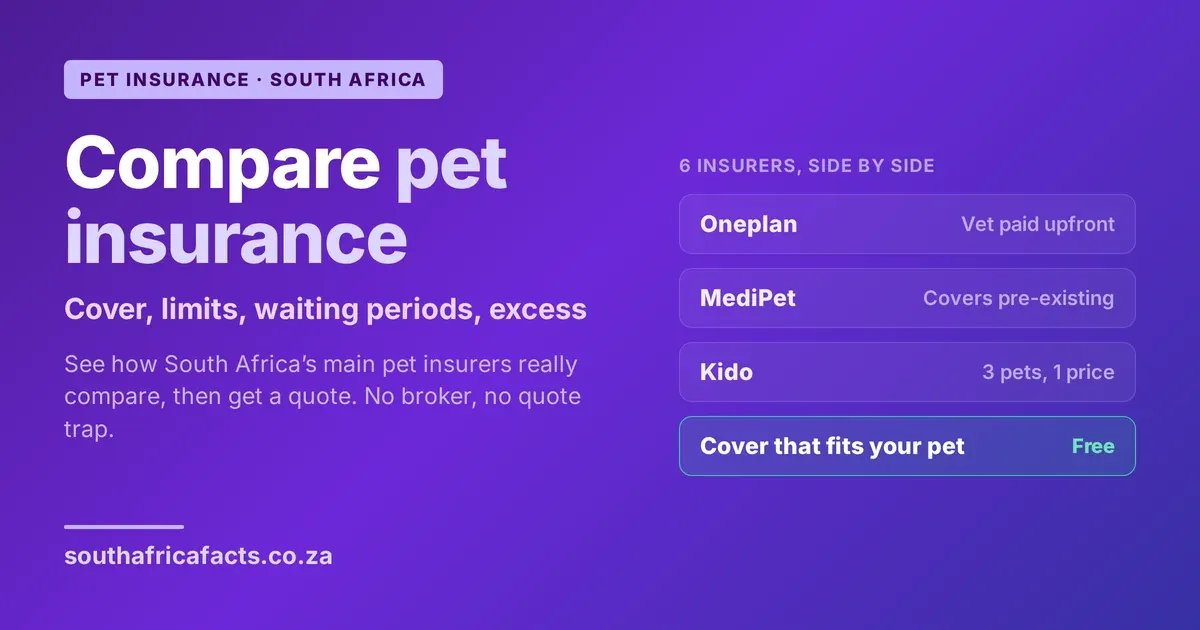
Vet bills for a sick or injured pet can run into tens of thousands of rands. Pet insurance softens that blow, but the cheapest premium is rarely the best cover. Tell the tool what your pet needs and it compares the main South African insurers on what really matters, the type of cover, the annual limit, the waiting periods and the excess, then links you to each one for a real quote.
Compare Pet Insurance in South Africa
The right cover depends on your pet, not just the price. Tell us what you need and we show how the main insurers compare on cover, limits, waiting periods and excess.
Step 1
What level of cover do you want?
Step 2
What matters most for your pet?
Pick any that apply. Insurers that fit float to the top with a match note.
Your shortlist
How to read this, and what to check before you buy
- This compares cover, not price. Every insurer here quotes per pet, so the "from" figures are entry-level guides only. Your real premium depends on your pet's species, breed, age and where you live. Always get a live quote.
- Accident only covers injuries like being hit by a car, bites or swallowing an object. Accident and illness adds sickness like infections, cancer and chronic conditions. Full cover adds a routine or wellness benefit for vaccinations, dental and check-ups, usually as a paid add-on.
- Waiting periods apply before you can claim. Accident cover is often immediate, illness typically waits 30 days, and hereditary, congenital or musculoskeletal conditions can wait three months or longer. Read each policy's wording.
- Excess is what you pay per claim. Some insurers charge a percentage of the bill, others a fixed rand amount. A percentage excess can cost more on a big claim, a fixed excess is predictable.
- Pre-existing conditions are usually excluded. A few plans cover them on special terms or after a longer wait, so if your pet already has a condition, ask each insurer directly.
- This is not financial advice. We are not a broker and earn nothing from these insurers. Confirm the latest terms on each insurer's own site before you buy.
- Cover terms were compiled on 5 June 2026 from each insurer's public information and can change at any time.
💬 Discuss this tool, or share your pet insurance experience, on the forum →
How to choose pet insurance in South Africa
Pet insurance exists for one reason, to stop a sudden vet bill from becoming a financial crisis or a heartbreaking decision. The right plan is not the cheapest one, it is the one whose cover, annual limit, waiting periods and excess match your pet and your budget. A young, healthy dog or cat is the easiest and cheapest to insure, because once a condition appears it usually counts as pre-existing and is excluded, so the best time to take cover is early.
Start with the level of cover. Accident-only is the cheapest and covers injuries, accident and illness is the common middle ground, and comprehensive plans add a routine or wellness benefit for vaccinations, dental and check-ups. Then look past the premium at three things that decide real value, the annual limit, which is the most the insurer will pay in a year, the waiting periods before you can claim, and the excess you pay on each claim. A flat, fixed excess is predictable, while a percentage excess can be a nasty surprise on a big claim.
Insurers differ in useful ways. Oneplan pays the vet upfront through its claim card, so you are not out of pocket while you wait for a refund, and it covers pre-existing conditions after twelve months. dotsure covers more species, including birds and reptiles, and has the lowest percentage excess. MediPet sells a plan that covers pre-existing conditions. Kido lets you cover up to three pets for the price of one. OUTsurance uses a fixed excess and pays cash back after claim-free years, and Woolworths adds third-party liability cover. Use the tool above to shortlist, then get a quote from your top two or three.
While you are here, you can also compare medical aid plans for your household, check your bank fees, or browse all our free South African tools and calculators.
Frequently asked questions
Is pet insurance worth it in South Africa?
It depends on how you would handle a big vet bill. A single accident or a serious illness such as a tick-bite fever, a swallowed object or cancer can cost from a few thousand to well over R30,000. If paying that in one go would hurt, insurance turns it into a predictable monthly premium. The trade-off is that you pay every month even in healthy years, and routine care and pre-existing conditions are usually extra or excluded. Cover is most worthwhile when your pet is young and healthy, because that is when you can still insure them before any condition becomes pre-existing.
What does pet insurance cover in South Africa?
Most plans fall into three levels. Accident only covers injuries such as being hit by a car, bites or a swallowed object. Accident and illness adds sickness, from infections and skin conditions to chronic and serious illness. Comprehensive or full cover adds a routine or wellness benefit for vaccinations, dental and check-ups, usually as a paid add-on. Almost every insurer lets you visit any registered vet. What is covered, and the annual limit, varies a lot between plans, which is exactly what this tool compares.
Does pet insurance cover pre-existing conditions?
As a rule, no, but there are real exceptions worth knowing. Any condition your pet showed signs of before the policy started, or during the early waiting period, is normally treated as pre-existing and excluded. Oneplan is unusual in South Africa because it covers pre-existing, hereditary and congenital conditions after twelve months of uninterrupted premiums, unless a condition is specifically excluded on your schedule, so the exclusion lifts once you pass the first year. MediPet's LitePlus plan is built to cover pre-existing conditions after a short 30-day wait. If your pet already has a condition, ask each insurer directly before you buy.
What is a waiting period on pet insurance?
A waiting period is the time after you sign up before you can claim for something. Accident cover is often immediate or close to it, illness typically waits about 30 days, and hereditary, congenital or musculoskeletal conditions can wait three months or more. Some insurers waive or shorten waiting periods if you can prove your pet was already insured elsewhere. Always read the waiting periods in the policy wording, not just the headline.
What is the excess, and what is the difference between a fixed and a percentage excess?
The excess is the part of each claim you pay yourself. Some insurers charge a percentage of the bill, often 10 to 25 percent, so on a R20,000 claim a 15 percent excess is R3,000. Others, like OUTsurance, charge a fixed rand amount whatever the bill, which is more predictable on a large claim. A few, like Kido, let you choose a flat excess in exchange for a lower premium. A low premium with a high percentage excess can be poor value when you actually claim.
How much does pet insurance cost in South Africa?
Entry premiums start at roughly R80 to R115 a month for basic cover and climb past R450 a month for comprehensive plans on larger dogs. The exact price is always quoted per pet, based on the species, the breed, the age and where you live, so no comparison site can show your real price. That is why this tool compares cover and shows from figures only, then sends you to each insurer for an accurate quote.
Cover terms were compiled in June 2026 from each insurer’s own public information and can change at any time. This page is general information, not financial advice, and we are not a broker and earn nothing from these insurers. Always confirm the latest cover, premiums and terms on each insurer’s own site before you buy. Last reviewed August 2026.